Dal bhat power 24 hours, one toilet, no shower.
This is the mantra our guide introduced to us for trekking in Nepal.
- We had dal baht daily for lunch, as you get free “refills” and can stuff yourself properly. First days you’re too shy (not hungry enough) to say yes to refills, but you quickly learn and end up eating double the portion every time. The right way is to eat with hands, which we did a couple of times (too much hand washing)
- There was usually one toilet, two if very lucky
- Except there mostly was a shower, it’s just ice cold (cold water in a cold room with no windows and wind blowing through). So mostly you decide not to have one. It’s surprising though how one can get used to the cold showers – at first it’s cold but second time you go under not so bad. Hot showers cost 1-3 EUR, but are rarely available. No shower available at all happened 4-5 times.
The Manaslu and Tsum valley trek lasted for 21 days – 19 days of hiking starting from elevation 570m above sea level to ca 3700m in Tsum valley, back down to ca 1700m and then on Manaslu side to the highest point Larke pass at 5106m and back down.
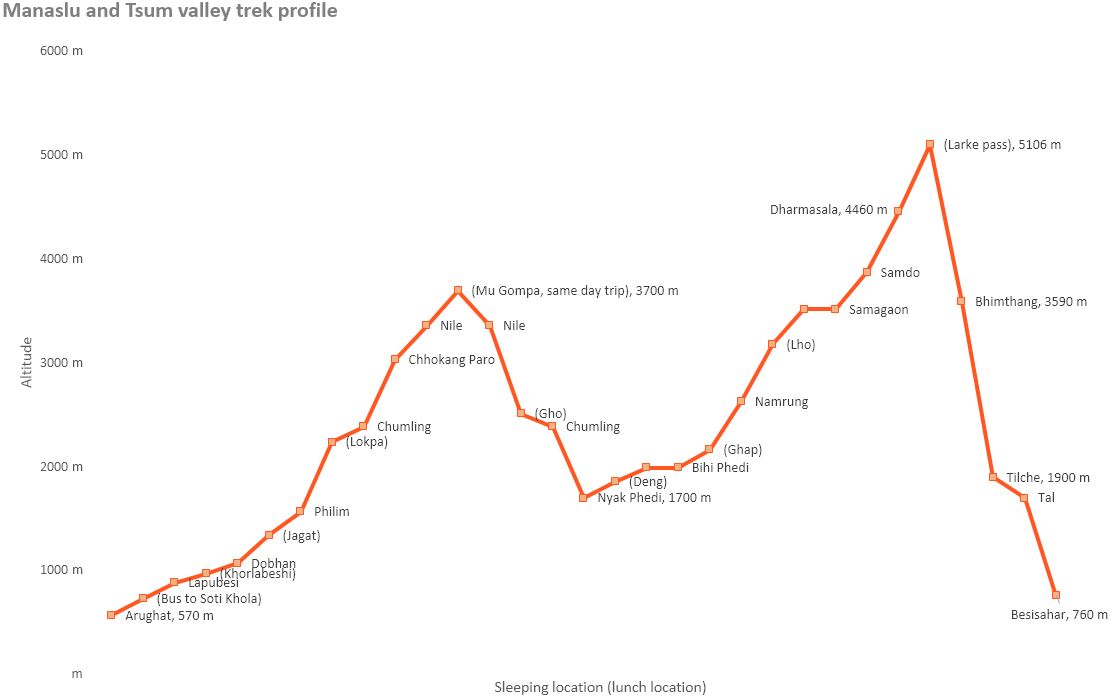
This was our first proper trekking trip (the only other one was 2 days hiking in Austria) so we were probably a bit too optimistic for taking a 21-day tour in a remote area. And of course it “helps” that during the year we didn’t do much exercise. Good that we caught up with the exercise now with almost 90 hours and ca 250 km of walking up and down.
I figured out that trekking is like cross-country skiing, except for the amazing sliding part you have to make many steps with your feet. There were easier days and harder days. On harder days you appreciate the trains of mules going past, as you have to stop to let them go through, so they don’t kick you off the mountain, and can take a breather and some water. Due to the mules there’s also so much shit on the way that it determines your next step. Sometimes you step on a looser rock than you would want, just to avoid stepping into shit.
We started the trek with a cold, not sure if from the Kathmandu pollution or just managed to catch something, so the first days to a week was under a lot of coughing, sinus infection and probably a fever in the beginning. It was also difficult to lose it amongst the cold temperatures, cold showers, dusty paths and physical exercise. What a liberating feeling to be able to breathe through your nose again!
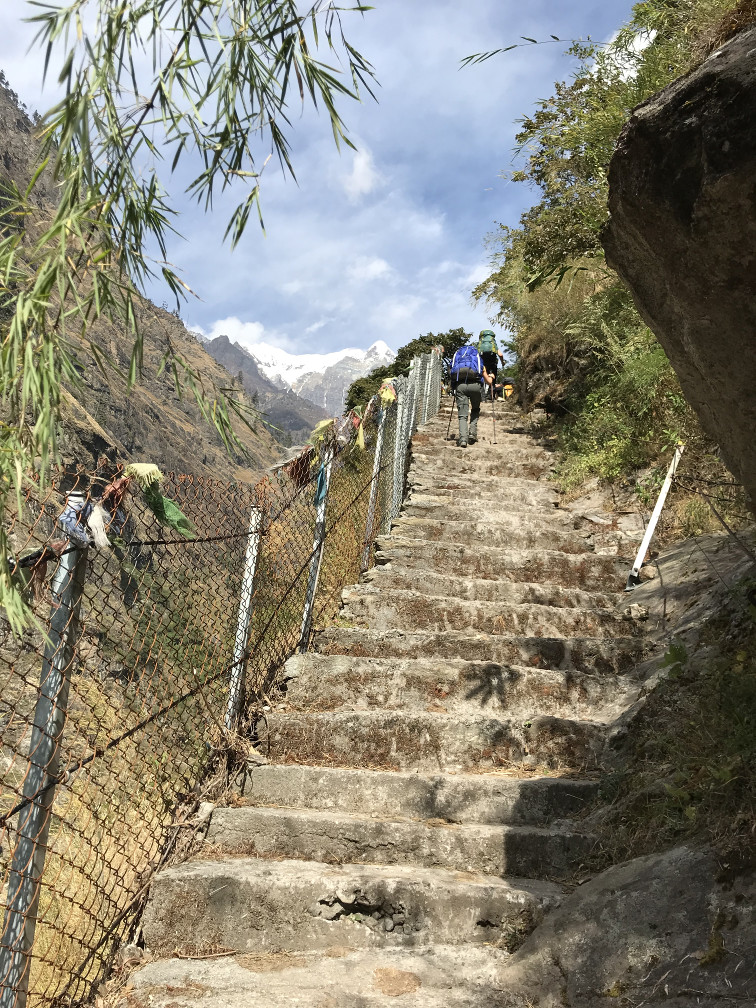
On some days I asked V: Remind me again, why are we doing this?! And you question your life choices on these steep stairways to heaven. But then you wake up in the morning in the stunning place, looking at the icy peaks and get the energy to continue.
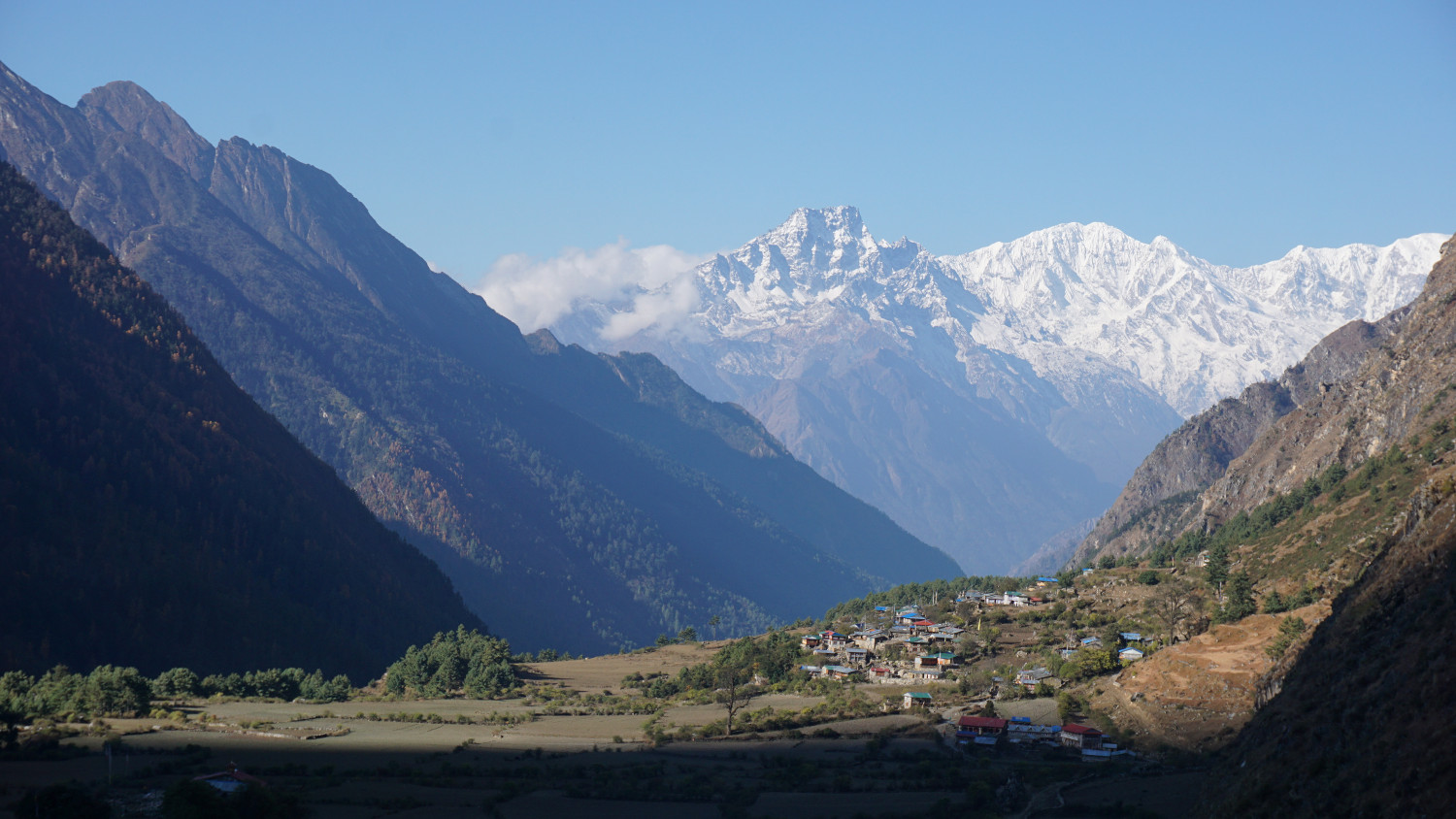
The views were breathtaking as one might expect: countless waterfalls, snowy peaks, bridges, small villages on the mountain.
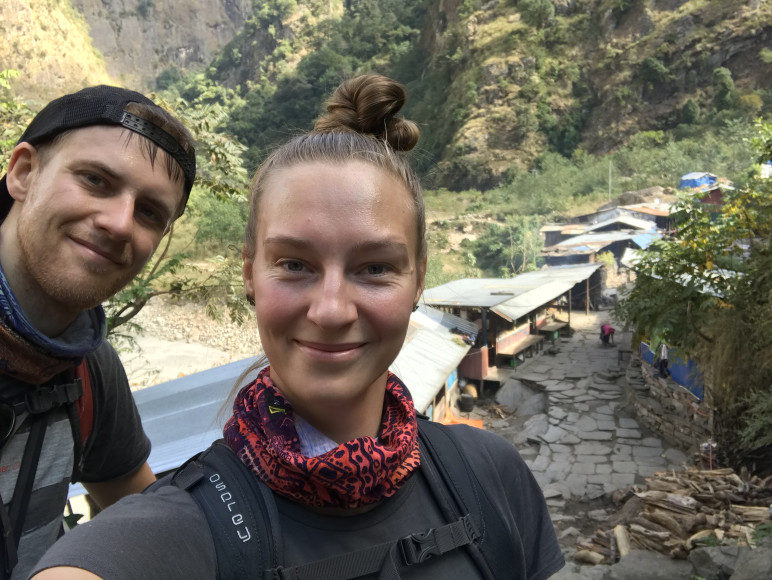
Arrived in a local village 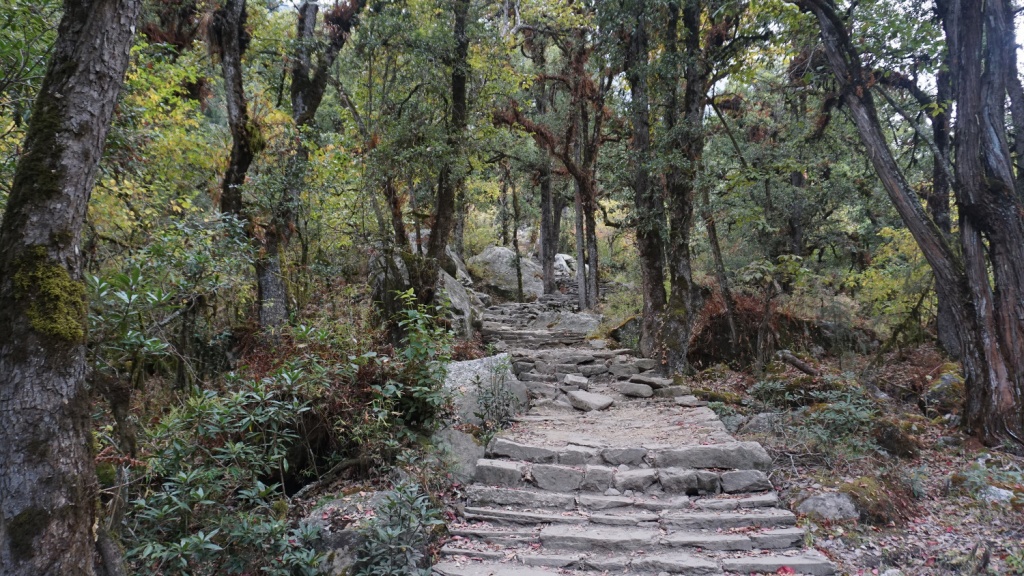
Forest like from the Lord of the Rings 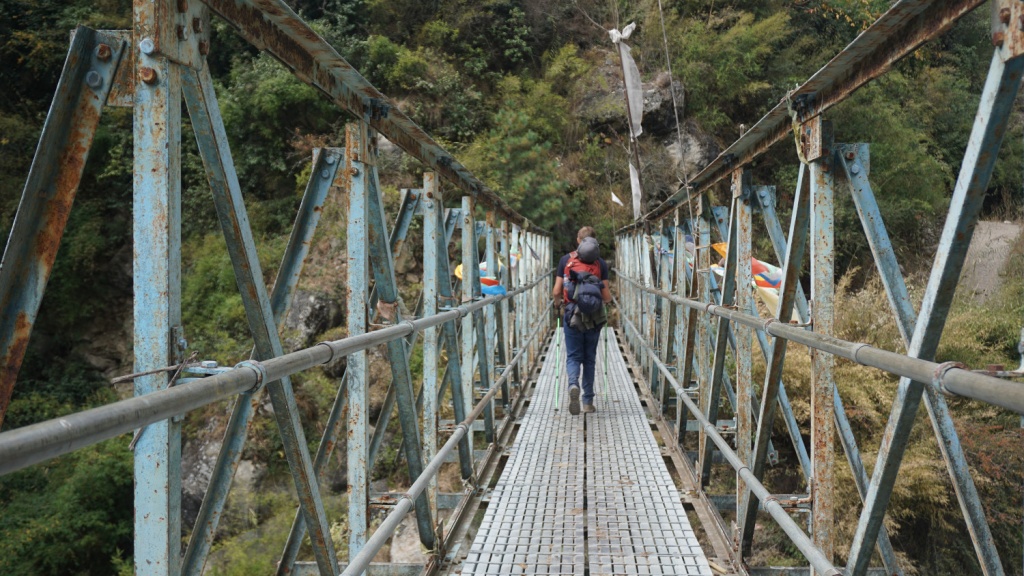
A bridge 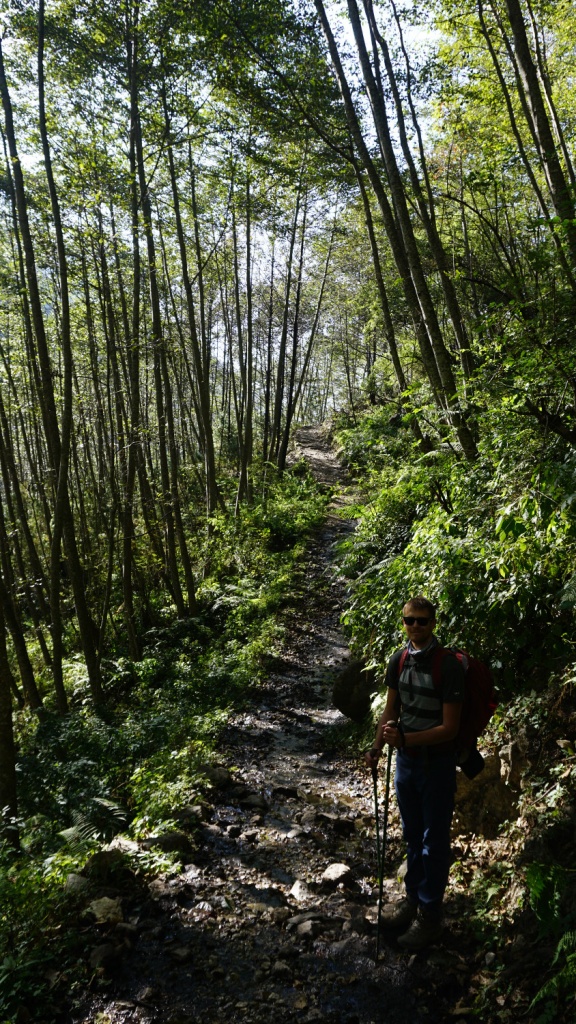
A forest like home 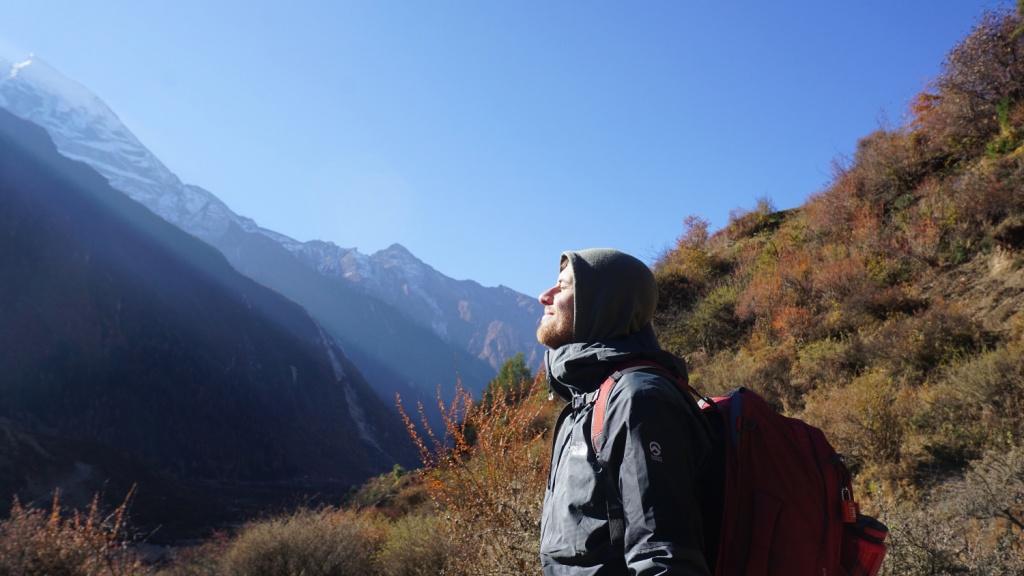
When the sun comes out and finally starts warming you 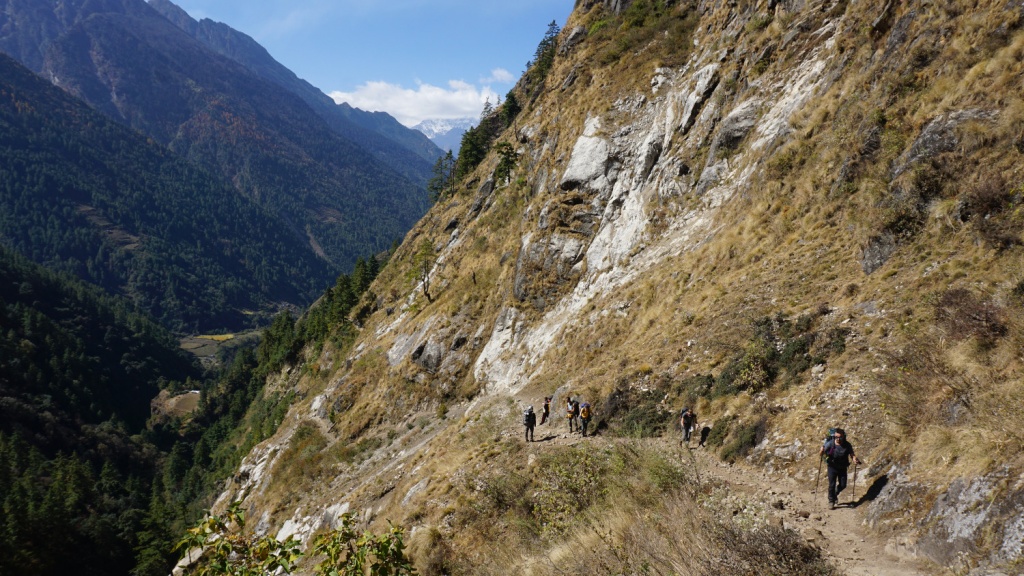
Some paths are more difficult 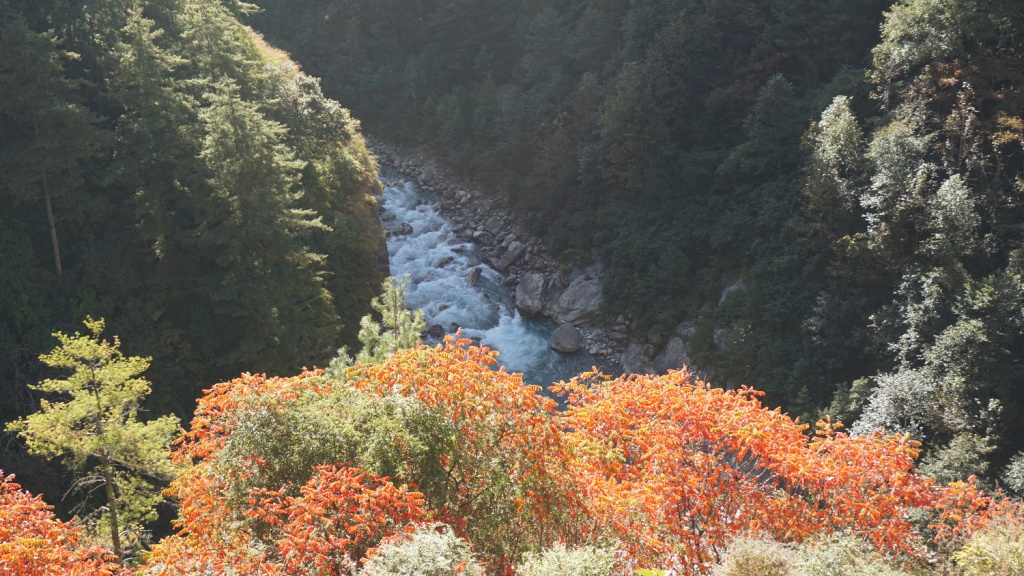
The amazing colours 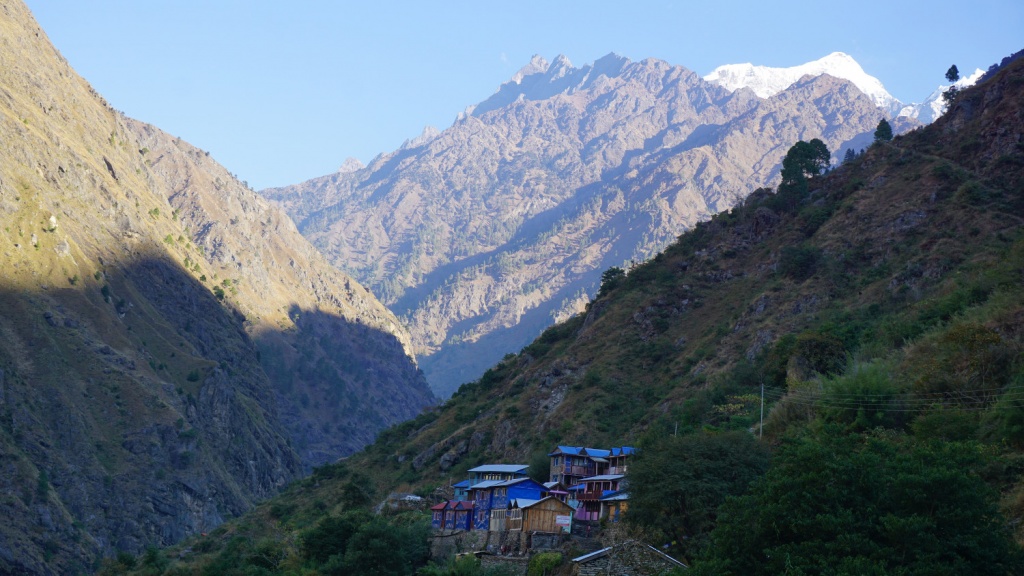
A mountain village 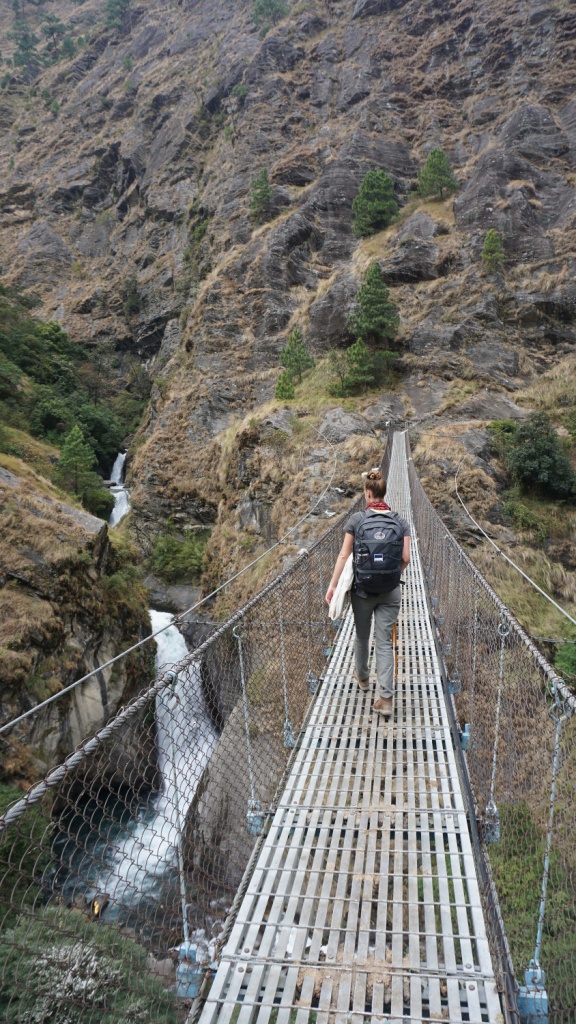
A very long bridge, one of many 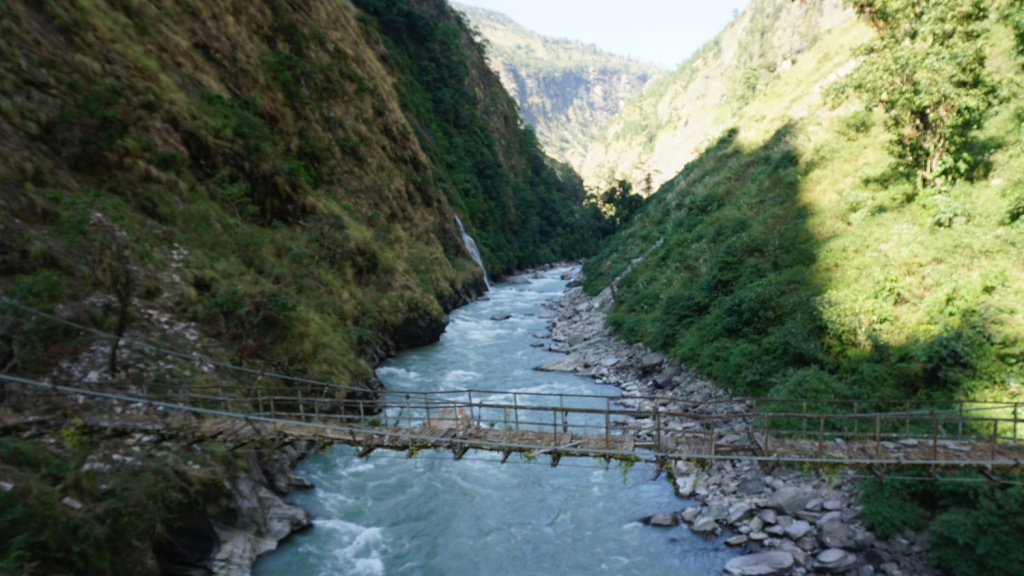
An old bridge 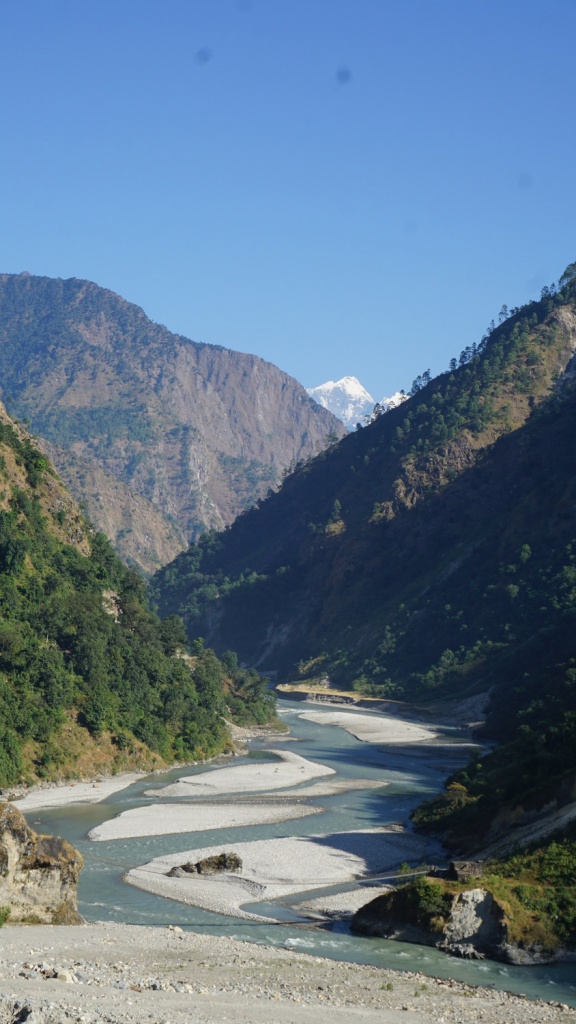
Always following the river of Budhi Gandaki 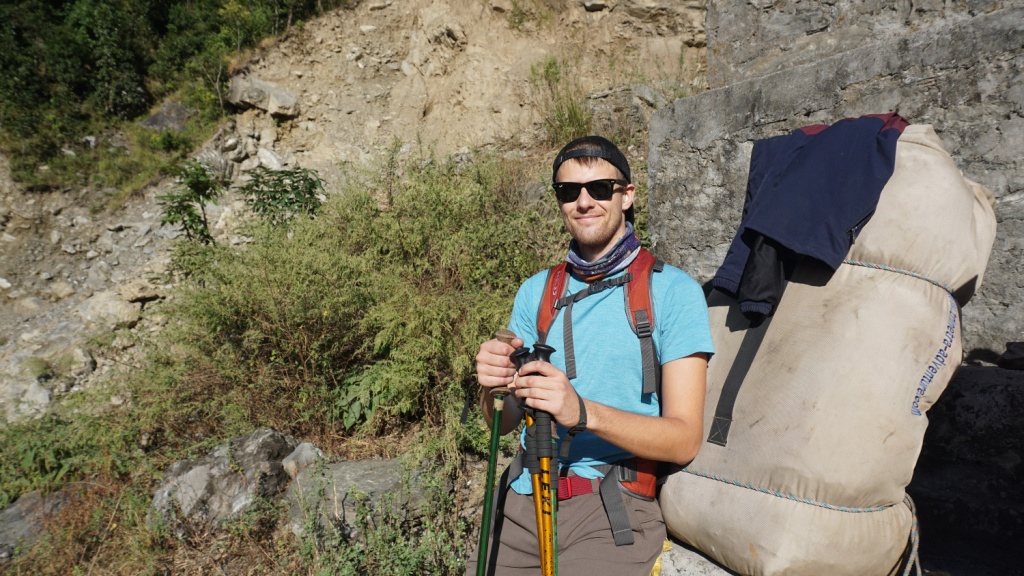
The size of the bags the porters/locals were carrying, minimum
Regime
The regime was similar to a training camp. Wake up was around 6:30, we packed our things, had breakfast at 7 and started walking latest at 8am. Most days we trekked till lunch, stopped for an hour or 1.5 to have dhal baht and continued trekking till ca 15. If shower was available then: 1. if it had hot water defo have a shower 2. if no hot water each would consider how dirty they are and if a shower is very necessary. In the beginning we had more showers and they slowly started fading as we got more into the mountain life and temperatures dropped.
We ordered our dinner at 5 and had it around 6-7. The time waiting for the dinner was usually the worst. There were no heaters, so it was very cold to sit around and wait, especially after the sun went down. Sometimes we would order a pot of tea to make it more enjoyable, but reading books was the main activity. It was very nice to have the time to actually finish some books, I had been longing for that. It would just be nicer to do that in a warm room with a cup of glogg.
Cold meant that there was not much interaction or party after dinner. Sleeping time was 20-21. It took some time to get used to it. And as you sleep so long I woke up a couple of times during the night and was awake from 5-5:30 every morning just lying there. The sleeping bags we got from the agency were clearly not real down and for -20 as indicated on the cover, but luckily our guides organised a blanket for us every night to keep decent temperature when sleeping.
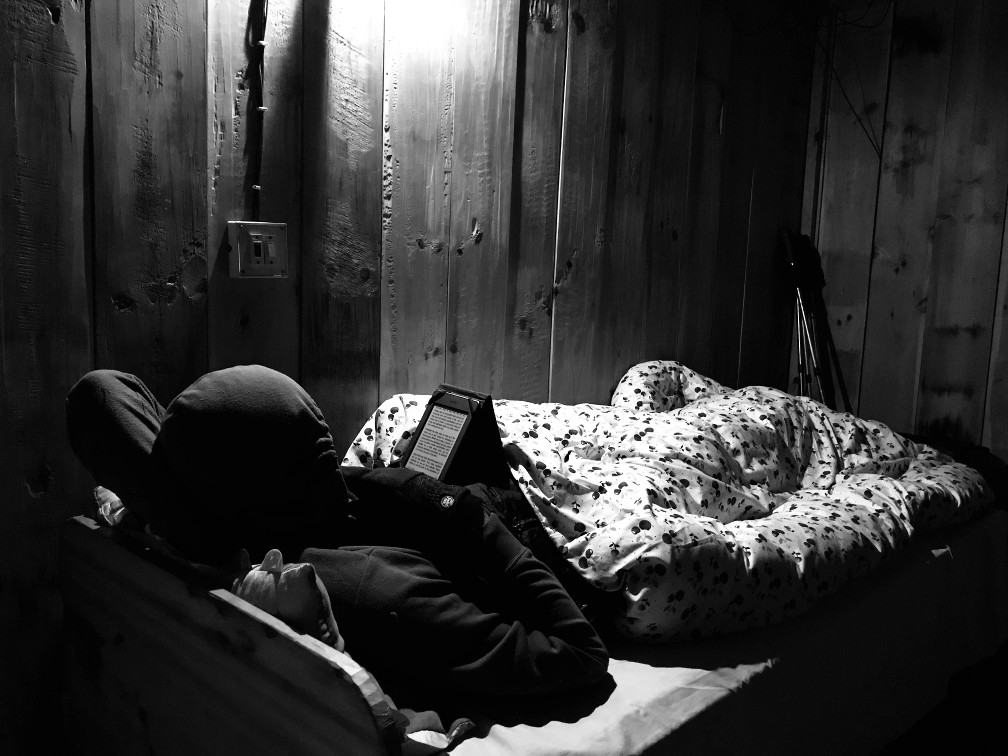
Reading a book fully covered (gloves, hood, blanket) 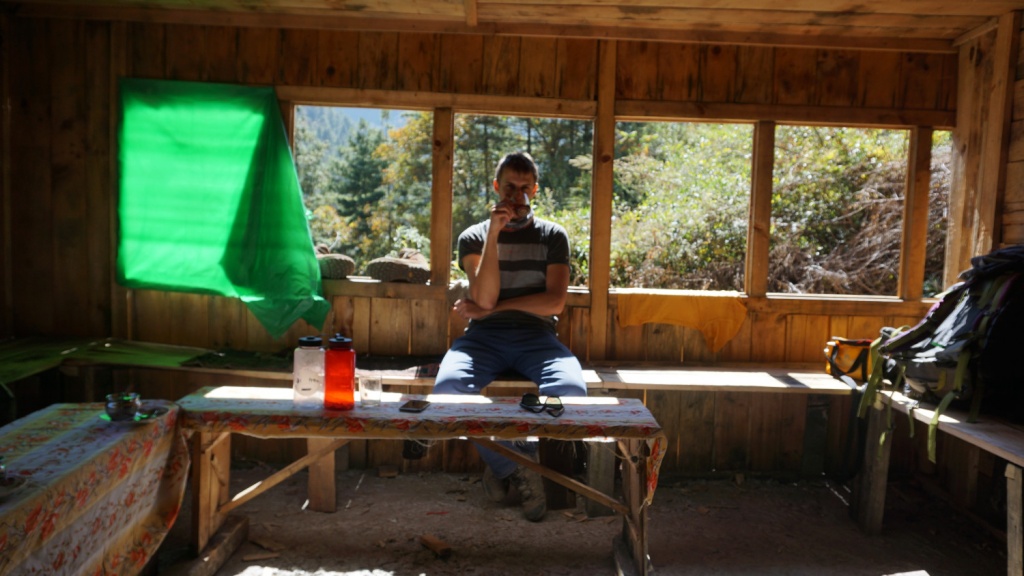
Waiting for lunch 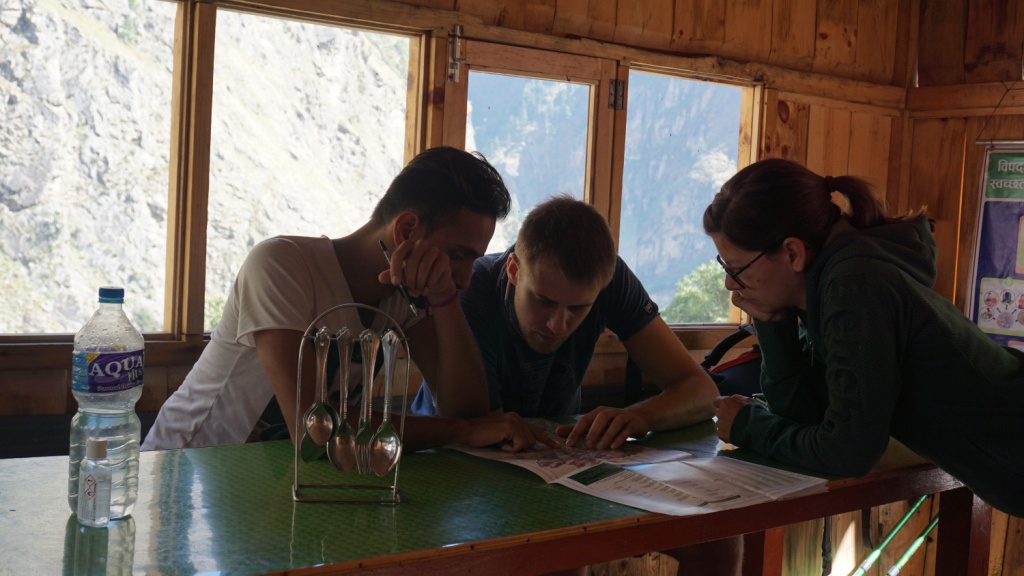
Planning the route 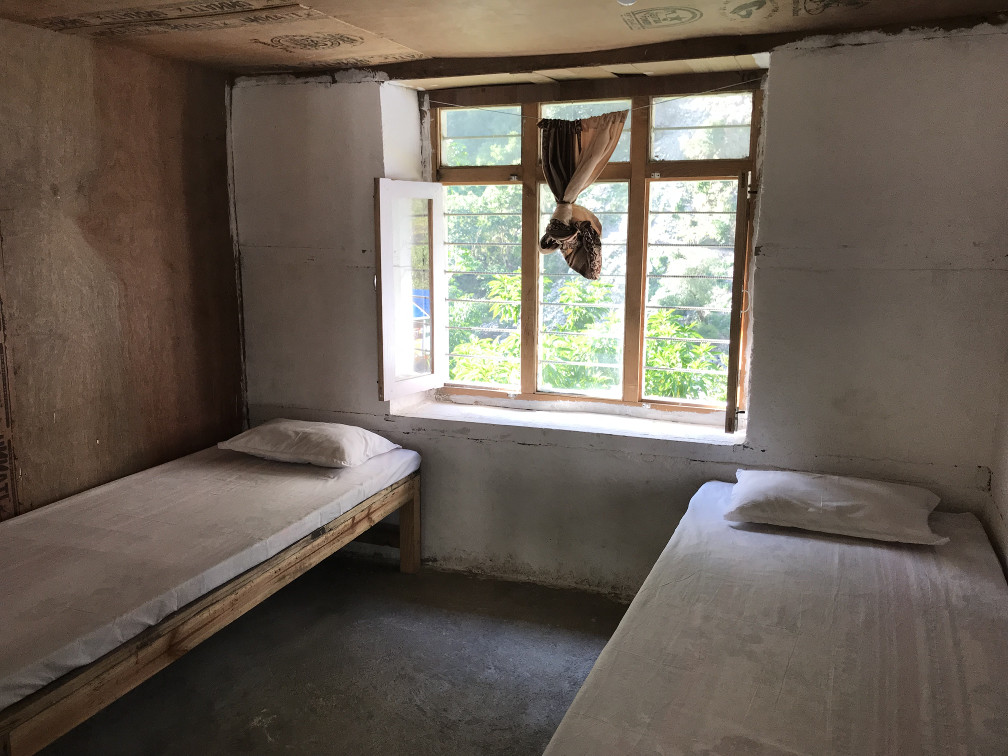
Sleeping time, one of the best places
Companion
Apparently they have heaters and hot springs on the Annapurna circuit, so maybe we should have started our trekking career in a less remote area. The number of hikers is a lot less here though, which we like and why we decided for it from the first place. Here you see other hikers mainly in the lunch places (if that) or in the evening in the tea house. Fellow travelers in the Tsum valley were mostly older, not many young people, and all German speaking (German, Austrian, Swiss). What’s up with that?? 🙂
On the last day before leaving KTM we also got two Austrians into our group – Isabella and Robert – so we travelled as 4 trekkers + a guide Ajay + an assistant guide Arjun. Almost every village we would get to where we stay overnight Robert would strip his pants and go around the place in his underpants taking pictures. 😃 They were funny this way. On Manaslu side there was also more crowd our age, a bit more people and more international.
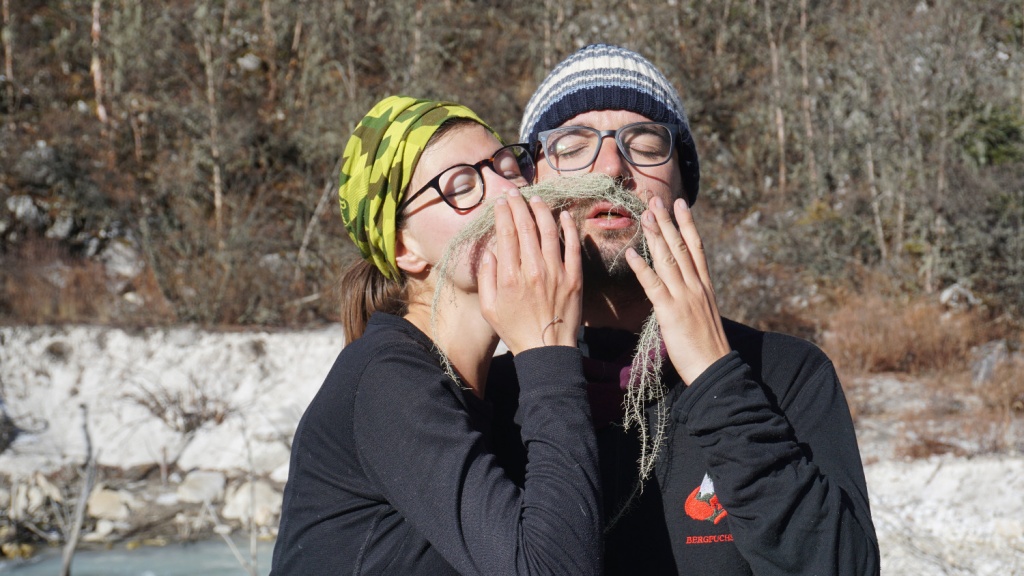
Isabella and Robert 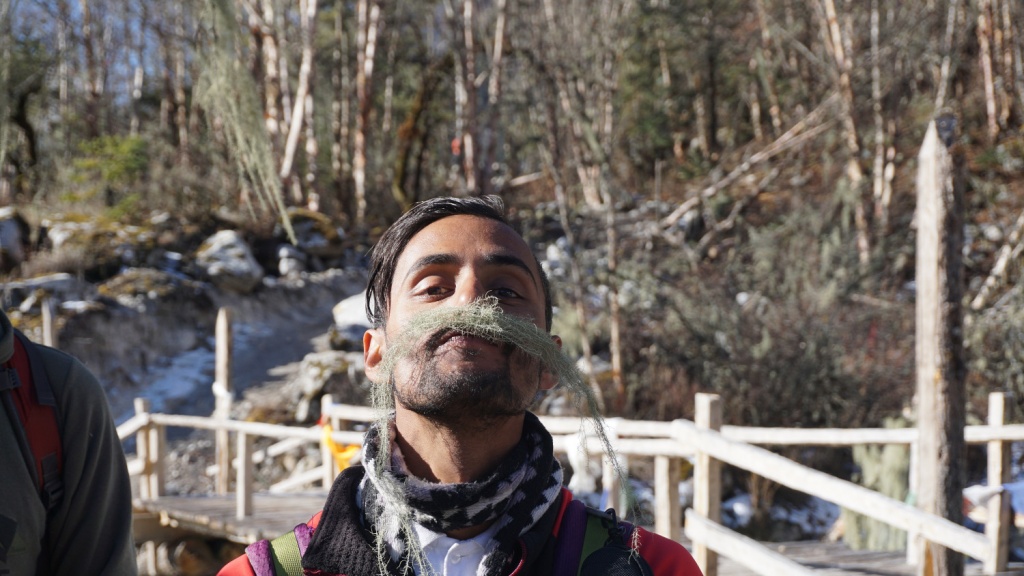
Ajay 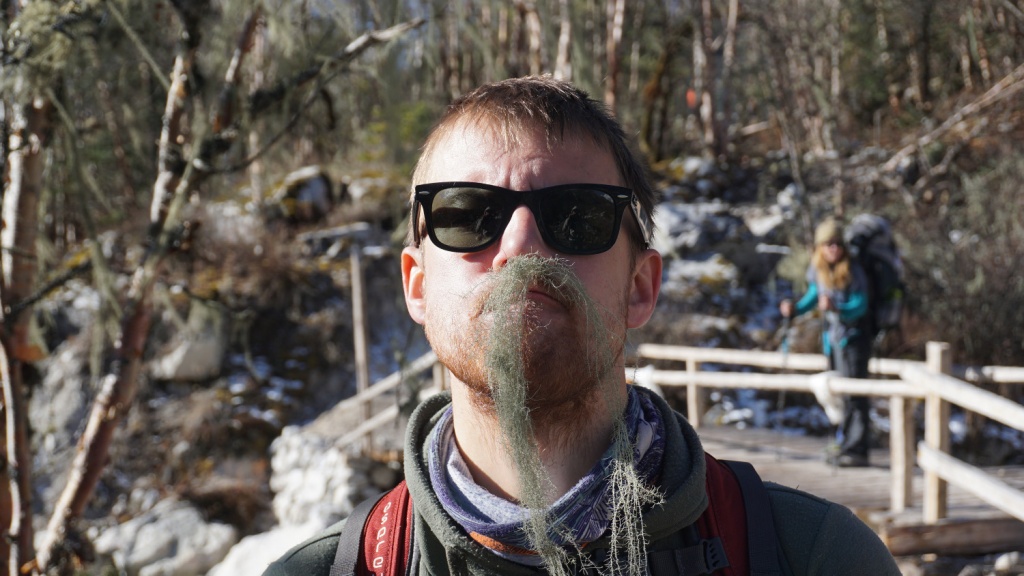
V
Food
All meals are made from scratch after you order. So it takes some time, but you know it’s fresh and properly cooked. Our guide briefed us on the first day that whatever you order you should eat to show respect as the locals don’t have much and they give you everything they can. So we ended up forcing ourselves to finish sometimes.
The menu was the same everywhere as it’s regulated by a committee. For breakfast chocolate pancakes became the favorite (seemed to last longer as fuel than porridge). As said dal baht was a classic for lunch (the taste actually differs from place to place). And for dinner there was always a choice: macaroni, spaghetti, fried rice, momos etc. So dinner depended on the mood and hunger levels. I liked to experiment, so I tried the local things and also desserts for dinner, as sometimes I felt I needed a sugar rush. Apple Pie was an amazing surprise and delight! From local things we also tried the local drink raksi, the soup thukpa and tsampa porridge.
Interesting things were also Tuna veg spring roll and Snickers spring roll. Omg the bounty spring roll was divine! Due to religious beliefs locals are not allowed to kill animals in the mountains, so most meals are vegetarian. Sometimes you get canned tuna, or chicken was available on some lower altitude villages, where it can be “imported”.
Hot water and tea were quite expensive, especially the higher you go. I enjoyed the free hot water in Tibet every time you sat down somewhere.
At the welcome dinner in KTM we met an Austrian, who had just returned from the Everest base camp trek and he recommended to take a lot of snickers with us. So we bought Snickers, Mars and Bounty for every day of the trek and also 4 toilet paper rolls. Twix is for some reason not available in this country.
The chocolates lasted well till the end, and were very nice to have, toilet paper reserves were not enough but luckily on sale in some places along the way. We also ended up eating quite some packets of coconut cookies that were cheap. But I’m pretty sure if someone would give me these in Europe I would say these are one of the worst cookies I’ve had.
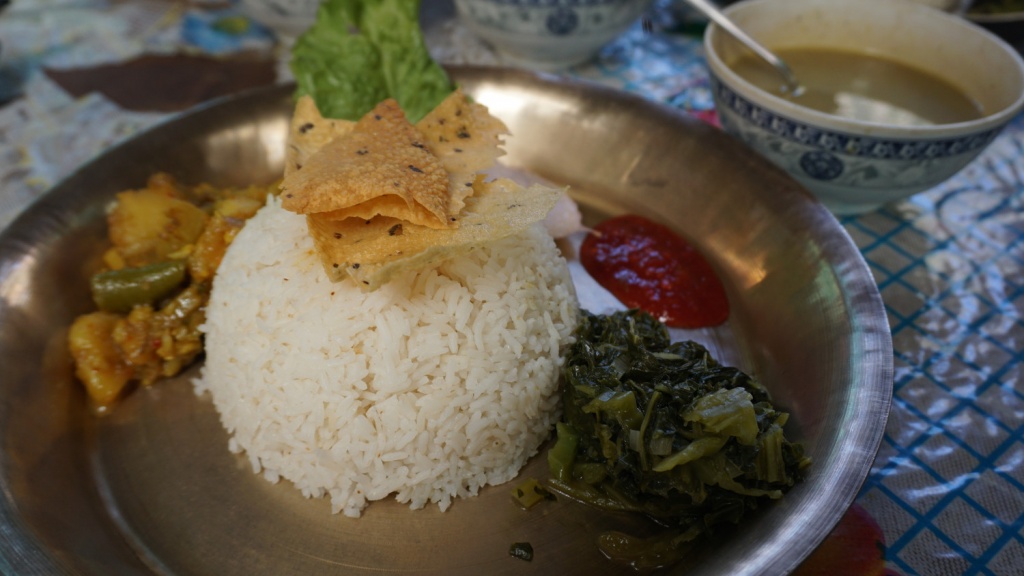
Dal bhat 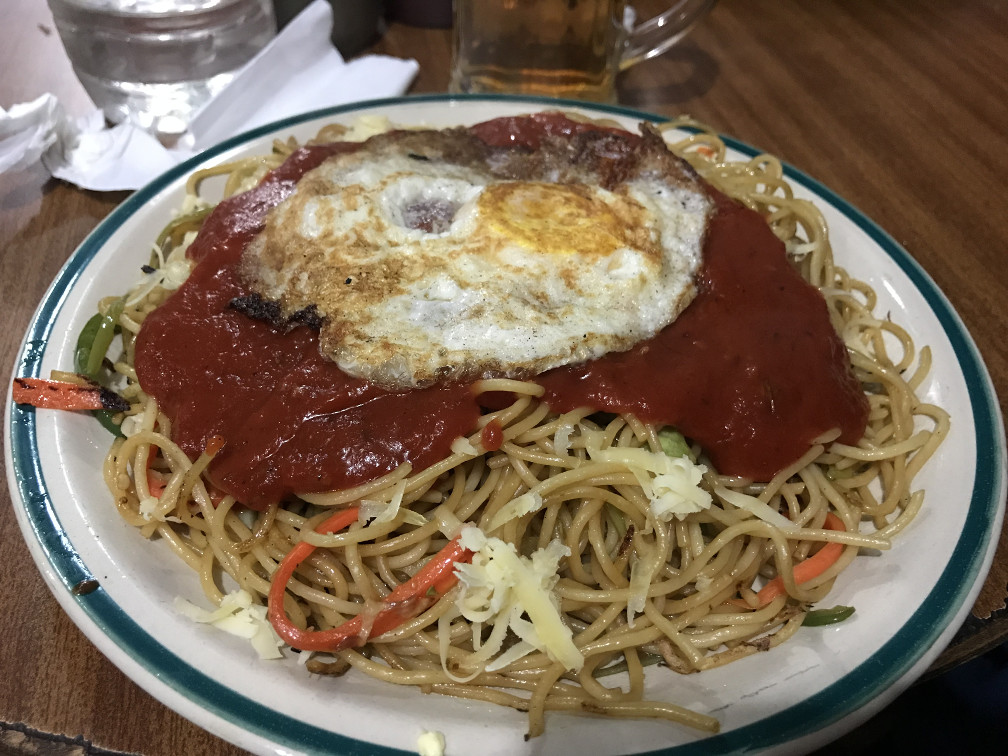
Spaghetti with best homemade tomato sauce 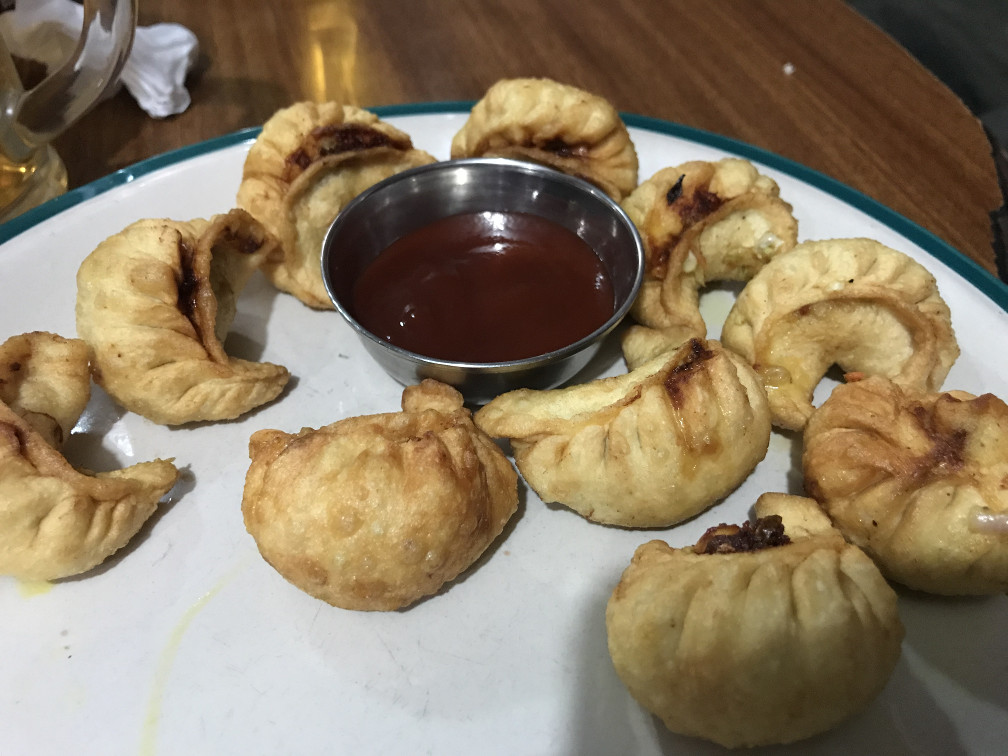
Momos 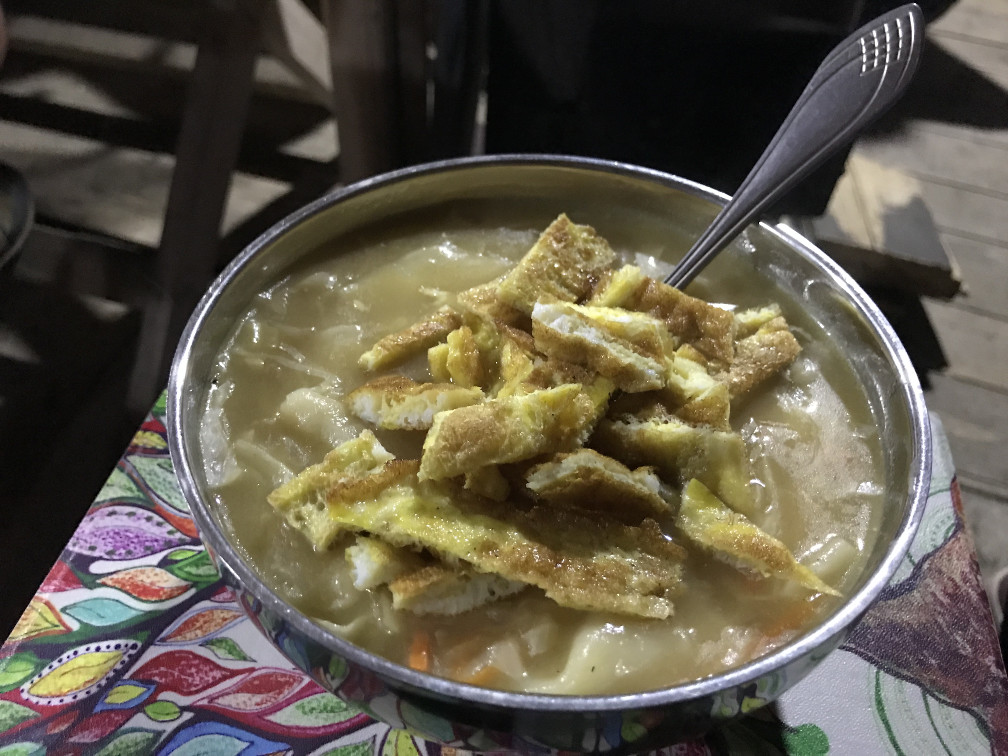
Tsukpa 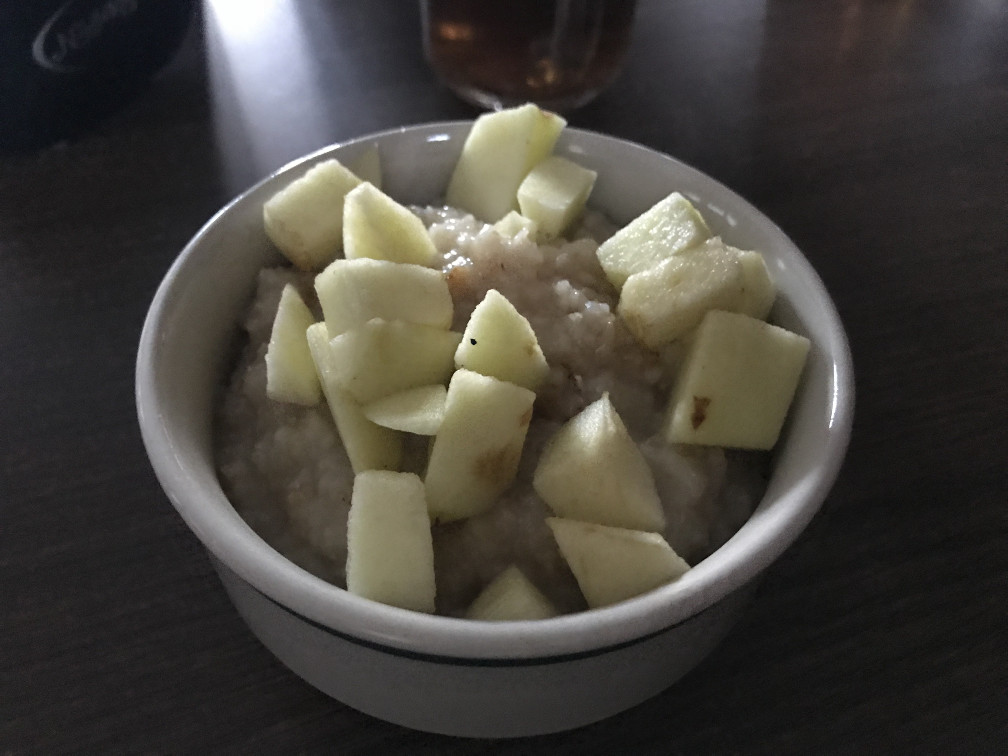
Apple porridge 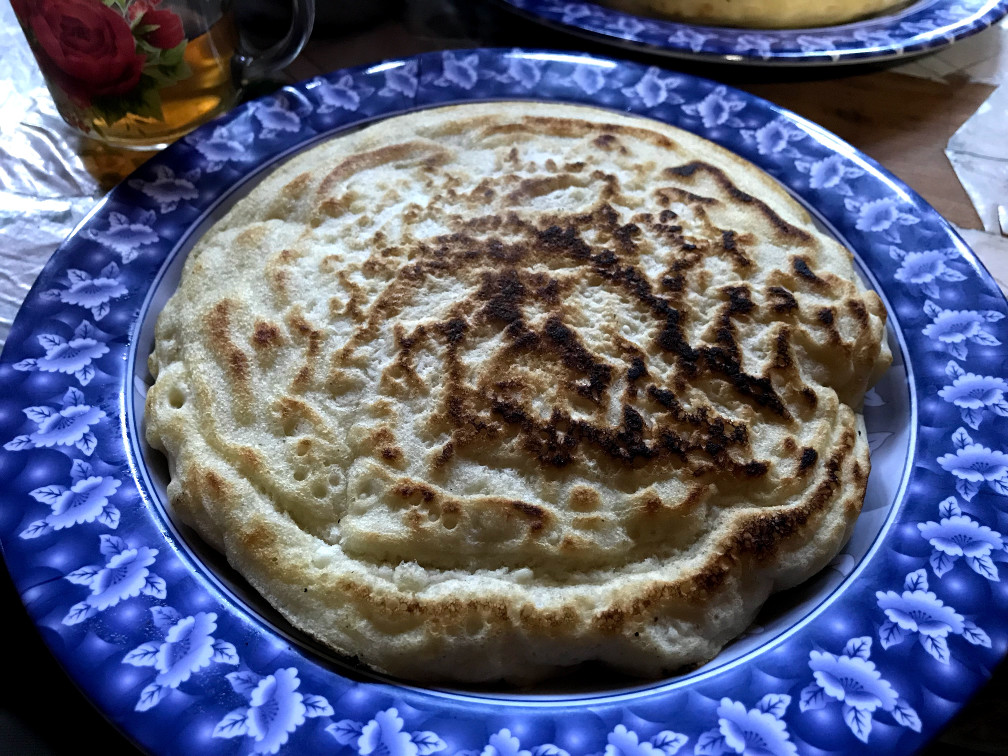
Pancake 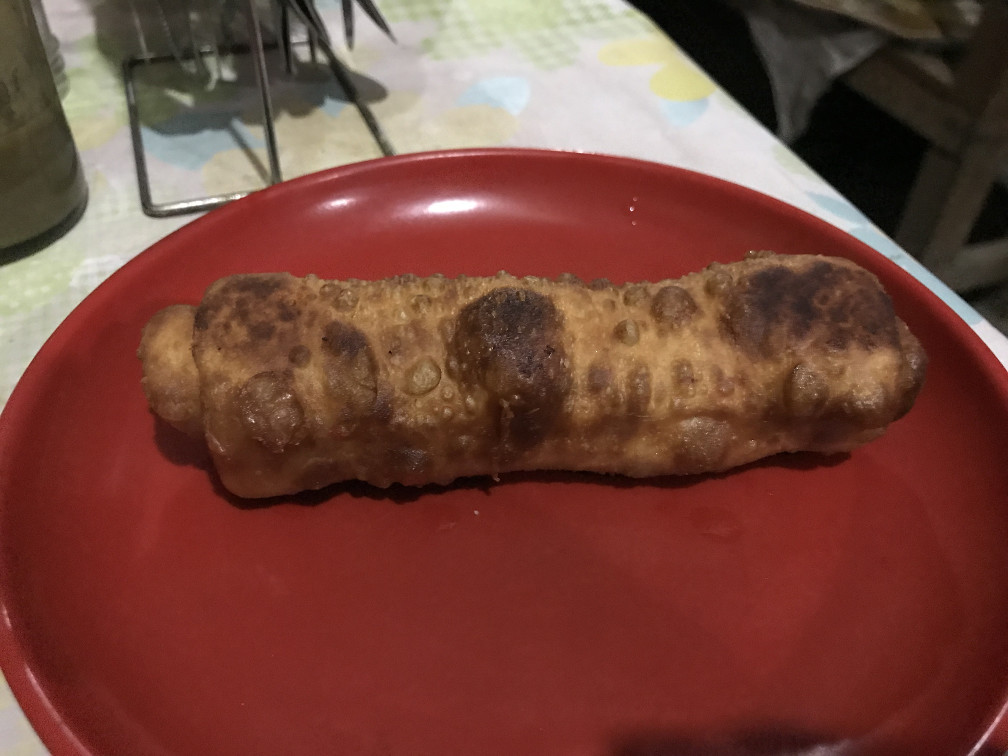
Bounty spring roll 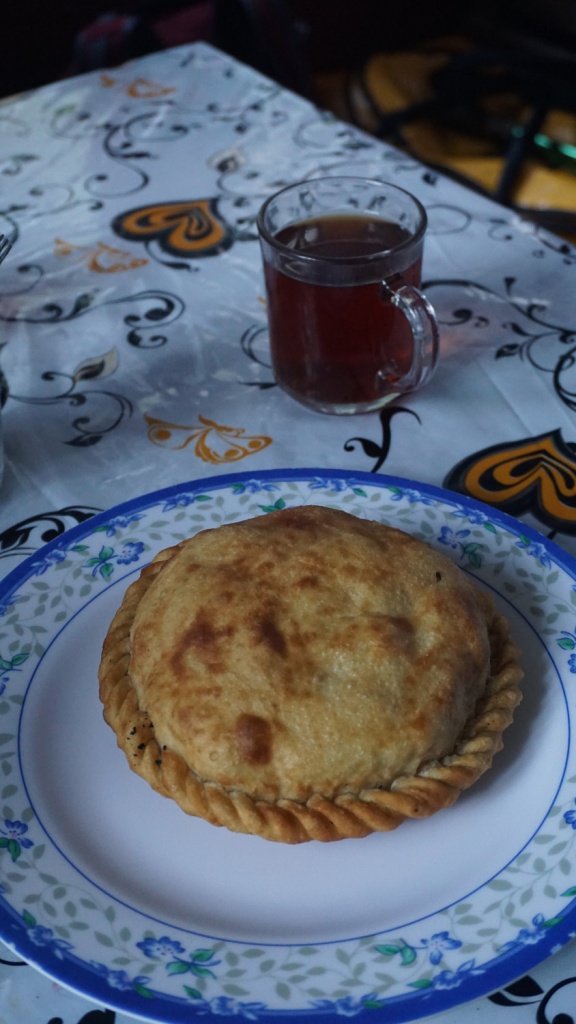
Apple pie 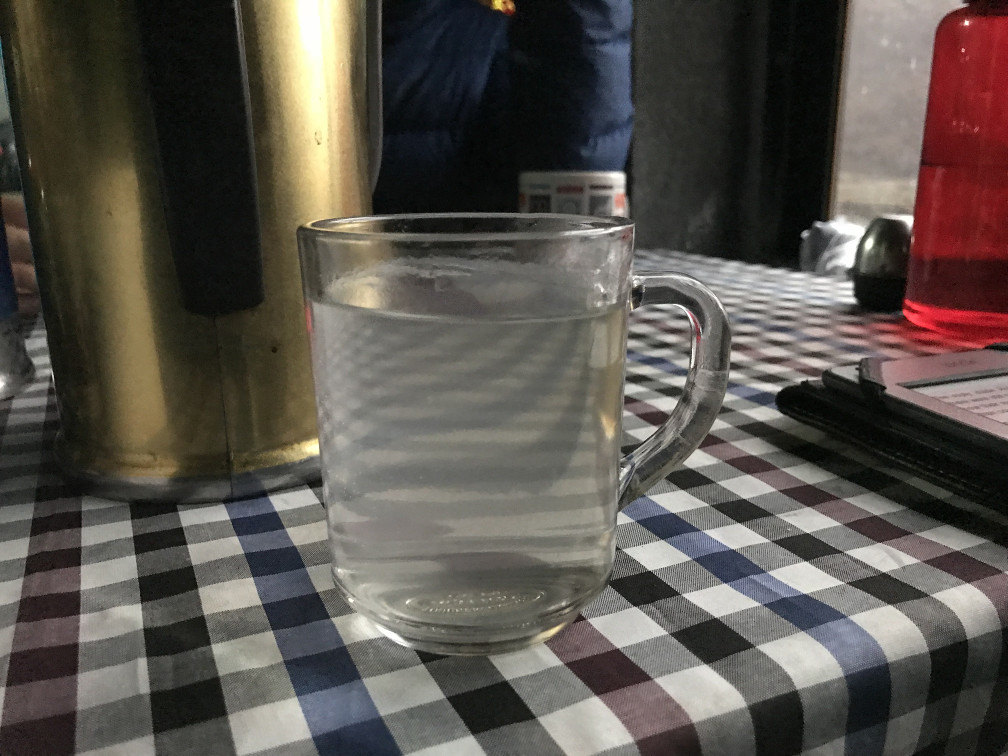
Local raksi
Area
The area is not accessible by a vehicle at all, so everything gets carried up and down by people or mules. It takes days to go one way. The locals carry everything on their backs: they attach a strap to the bag/basket that they put on top of their head so the weight is all on the spine. And a lot of them wear flip-flops or go barefoot all-together. Crazy! Then us tourists show up with our sticks and hard-core hiking boots and struggle going up with our max 10kg bags. They must think we are crazy paying money to do this. 🤦♀️
The area was heavily damaged by the powerful earthquake that hit Nepal in 2015, so a lot of buildings are new and being built still to restore the place for tourists and locals. We had some very nice “teahouses” we stayed at along the way, where you would want to park for longer than one night. Some others were shacks put up with whatever material is available. In all places walls were with gaps or very thin, so you can hear the people’s conversations in all the 5 rooms surrounding yours. There was no heating in the rooms or common dining area, except for 3 places that had ovens in the eating area. So it was very cold most of the time to chill around after hiking.
There was no cell reception during almost the entire trek, let alone internet. Most of the guest houses advertised free wifi, but it actually worked in only one place.
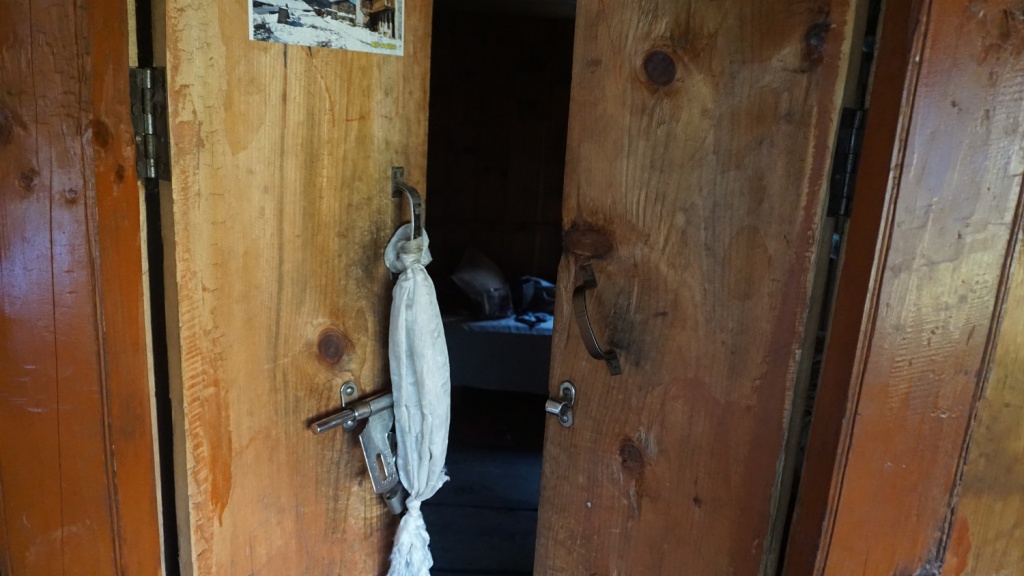
Atmospheric wooden doors of our room 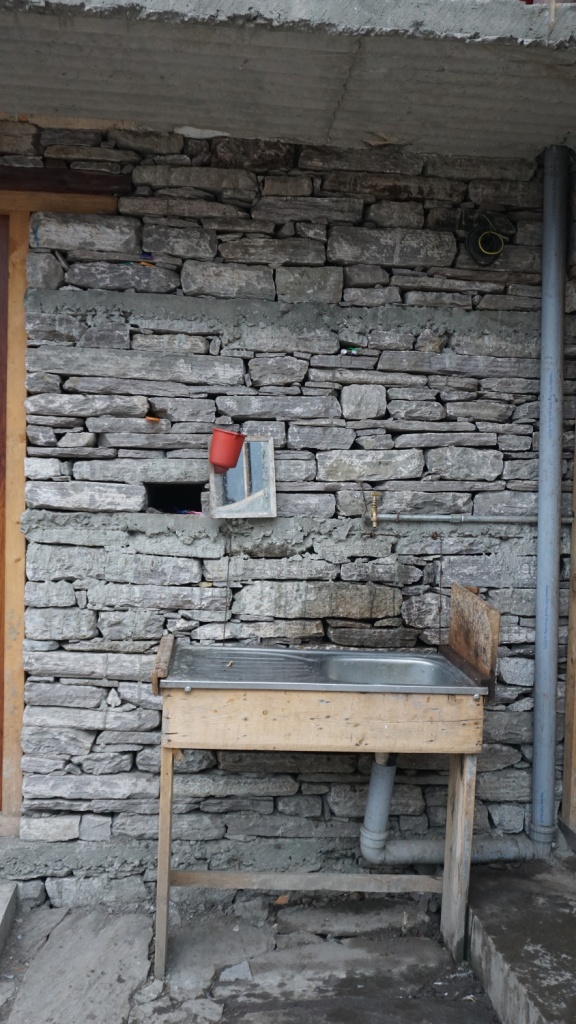
Modest bathroom – find the toothbrush 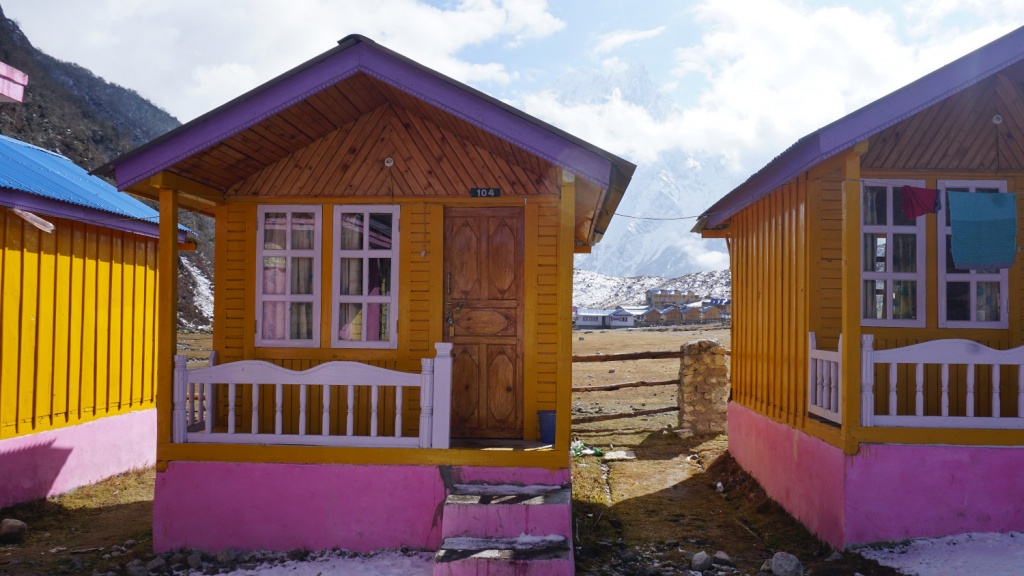
Our cutest lodging after crossing the pass 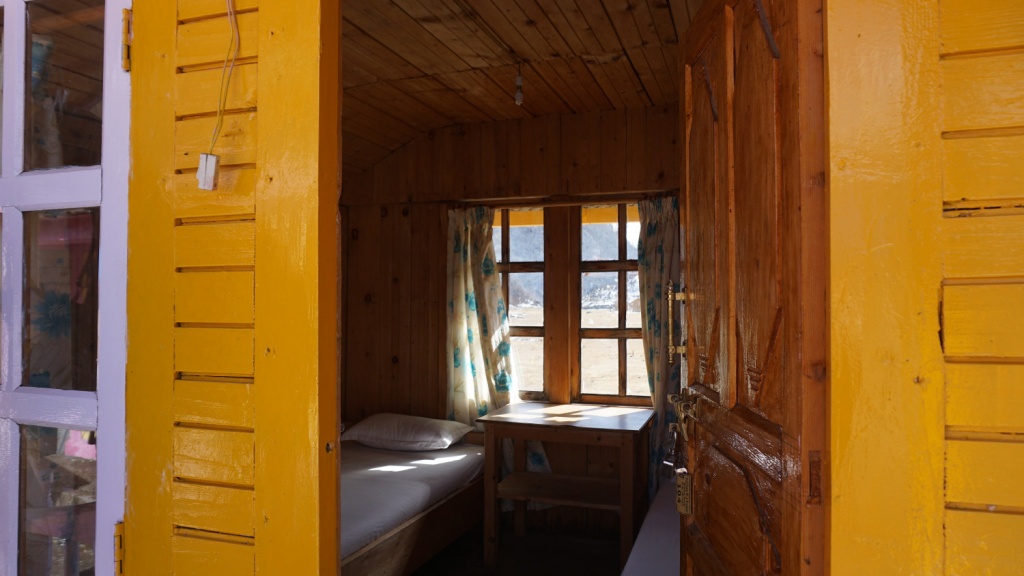
Cutest lodge on the inside 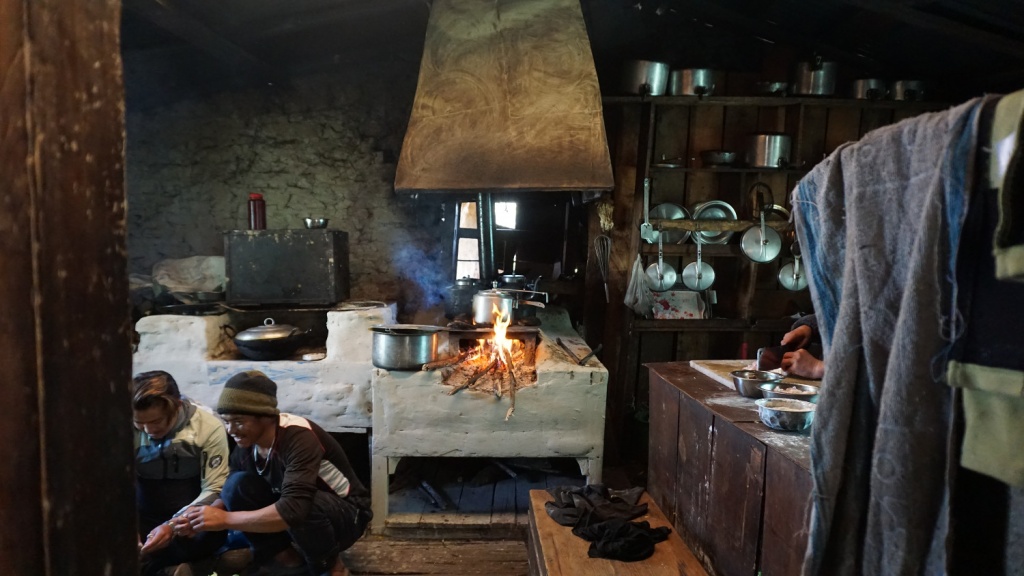
A local kitchen
Locals
Nepal is very poor, you see from the wrinkles on the peoples faces that they have had a hard life. In Tsum valley, as it’s closer to the Tibetan border people also look more Tibetan and their houses have the traditional curtains. Children look dirty everywhere, as if they’ve been eating mud all day every day. They keep asking for chocolate and balloons (don’t know which tourists have carried balloons that they know to request them). People take showers next to the road in public where there’s a tap or waterfall during the day when it’s sunny as there are no showers in the house.
In one of the houses in Tsum we met a girl, she looked very young. Her age we found out to be 21 years old, married and 8 months pregnant. She was petting a cat as she was talking to us. Can you imagine she has to walk all the way down to Kathmandu for checkups (takes 2 days). Really puts your life into perspective. She said she would like to live in Kathmandu, not abroad, but also not in this small mountain village where she still works the fields in her condition.
As for the burial traditions in Nepal: They burn the dead by the river and the water washes them away. Some of the locals with Tibetan roots also follow the sky burial.
From our guides we found out that it’s quite popular for the Nepalese to go be waiters abroad (Abu Dhabi, Malaysia,..), both of them had been. An office job in KTM would pay them ca 15 000 rupees (115 EUR) a month, whereas as a guide they get the same for a short 3-4 day trek. Rent would be 5000 and food ca 6000, leaving not much extra from the office salary. It’s a bit annoying to be away from friends and family for so long, but you need a bachelor degree to be a guide in the city, which most of them don’t have.
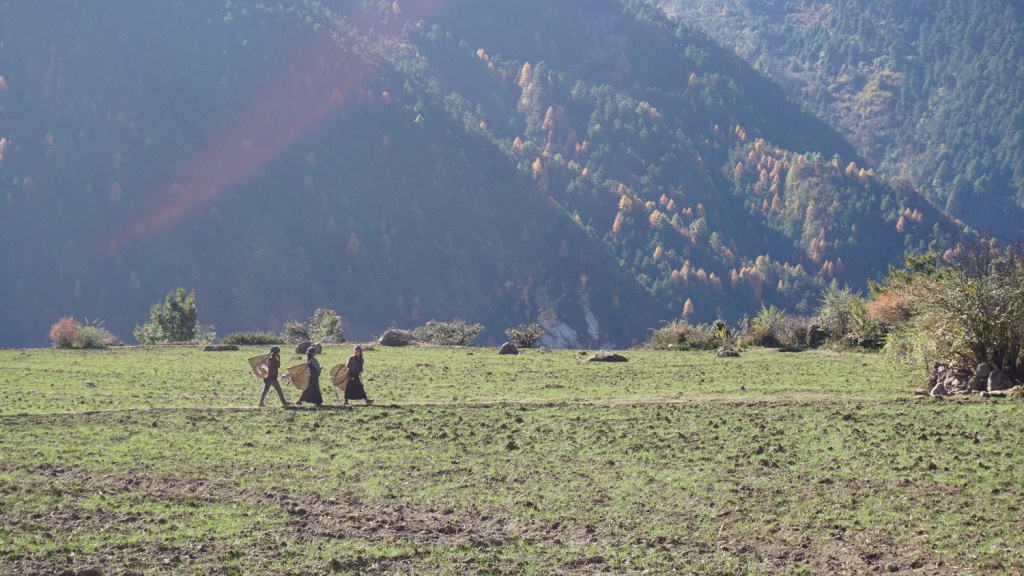
3 local women with their baskets, they pick and carry anything from crops to wood for fire and dung 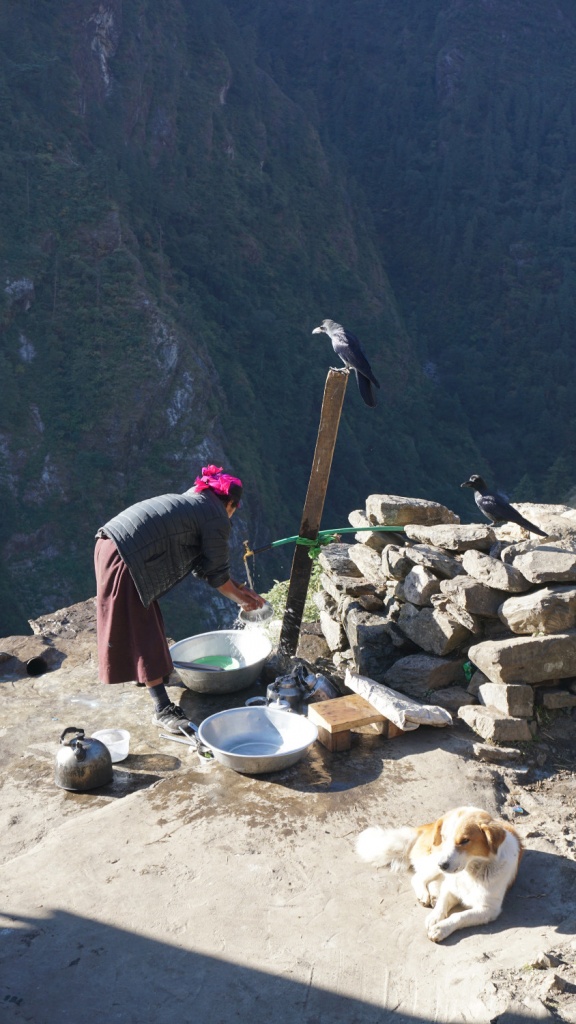
Local woman washing dishes with ice cold water outside 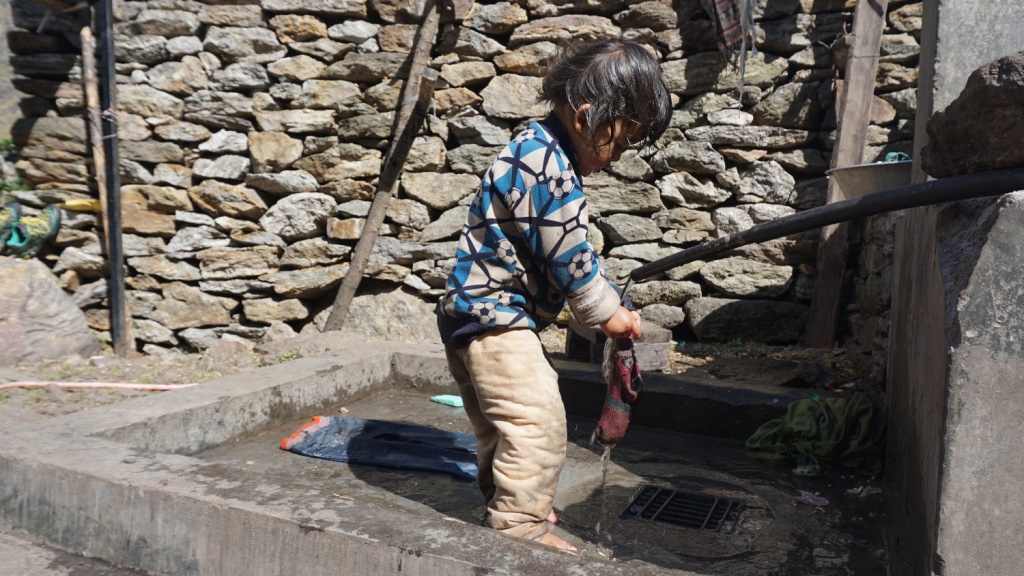
This child was so adorable and wanted to be very clean, kept washing its trousers and socks 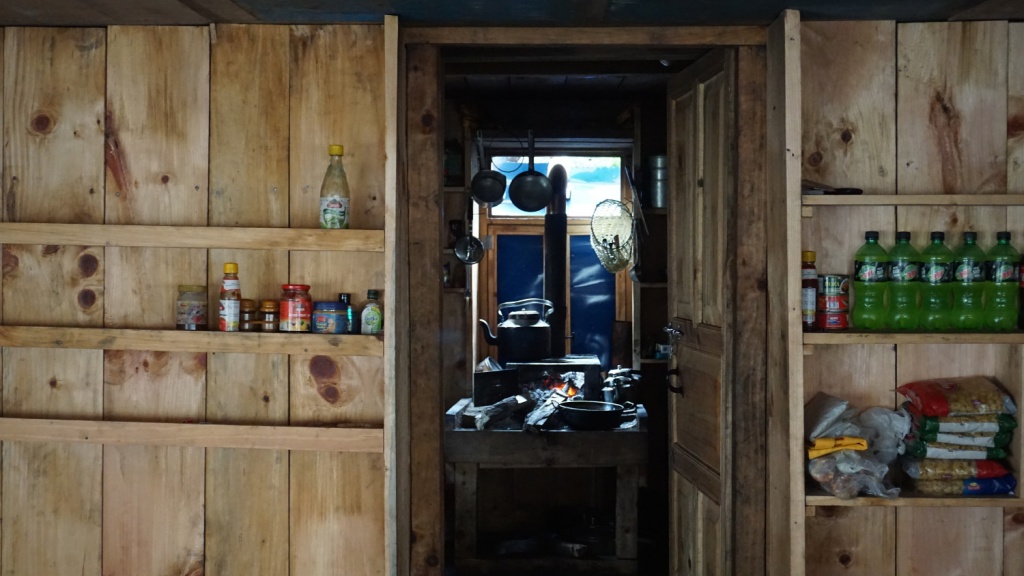
Another local kitchen 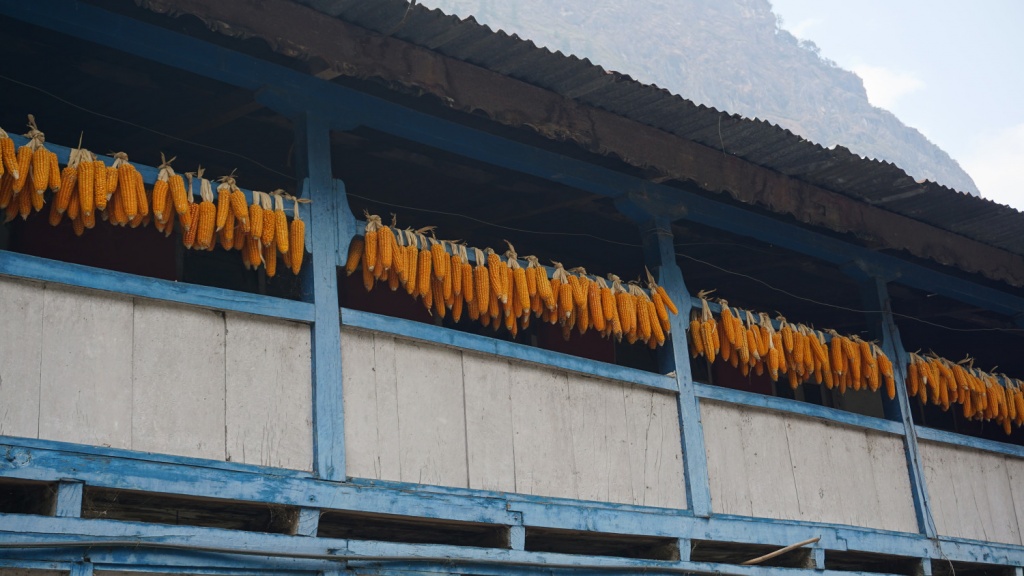
Drying corn 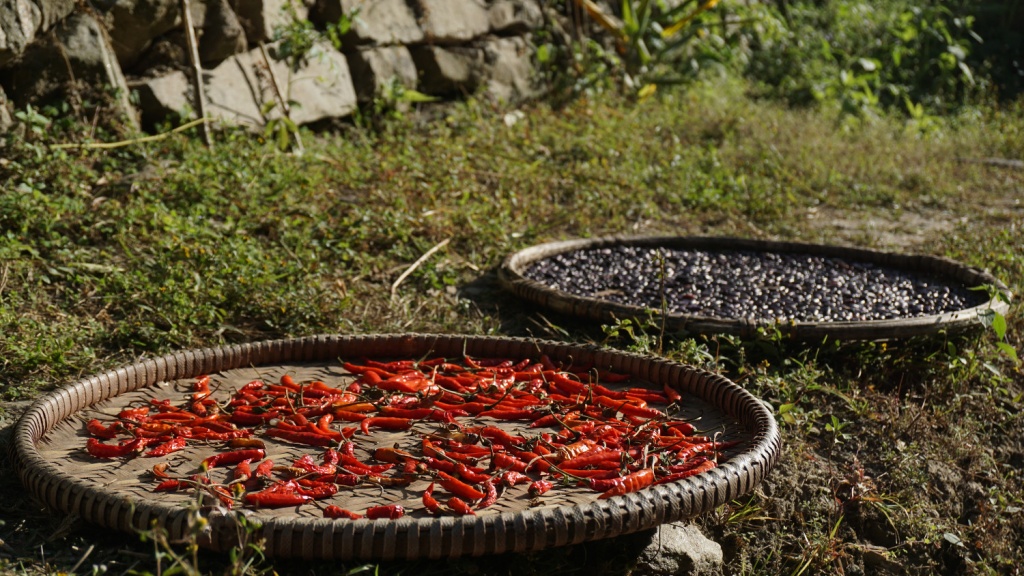
Drying chillies and other 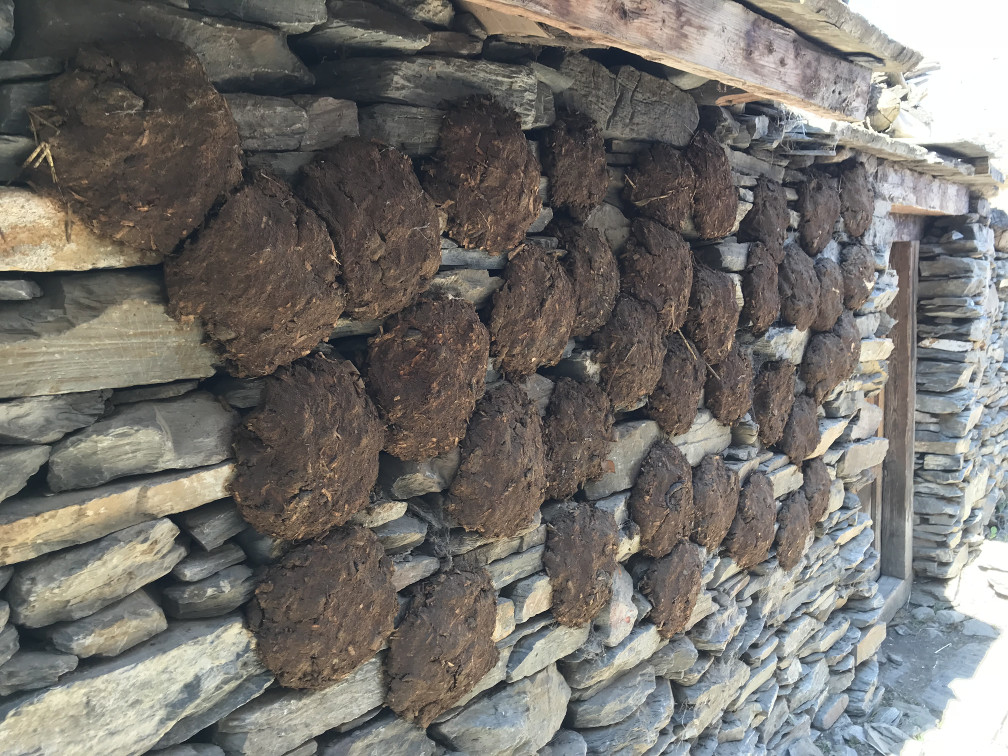
Dung is dried on the house walls and used for heating 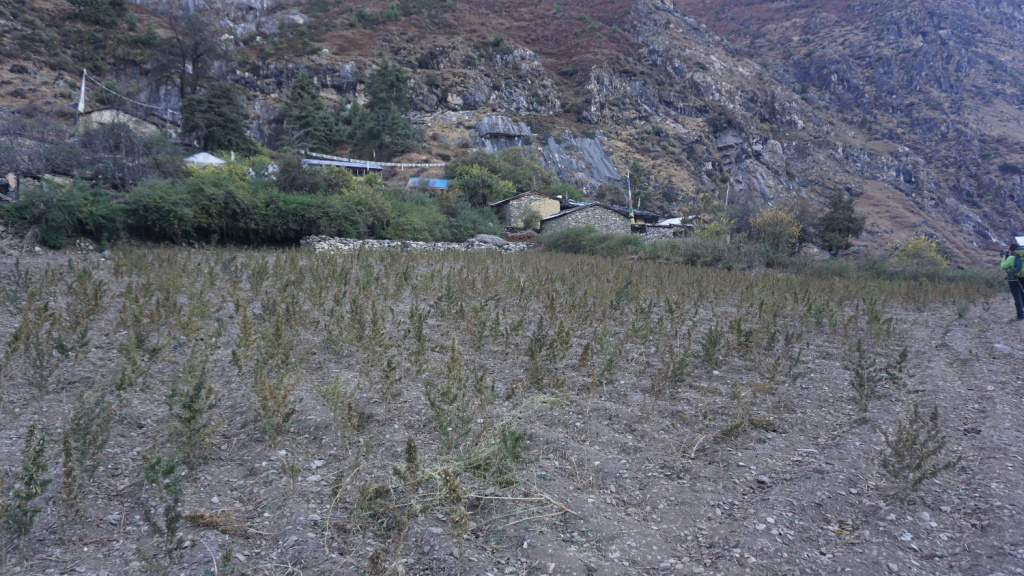
Weed fields all around 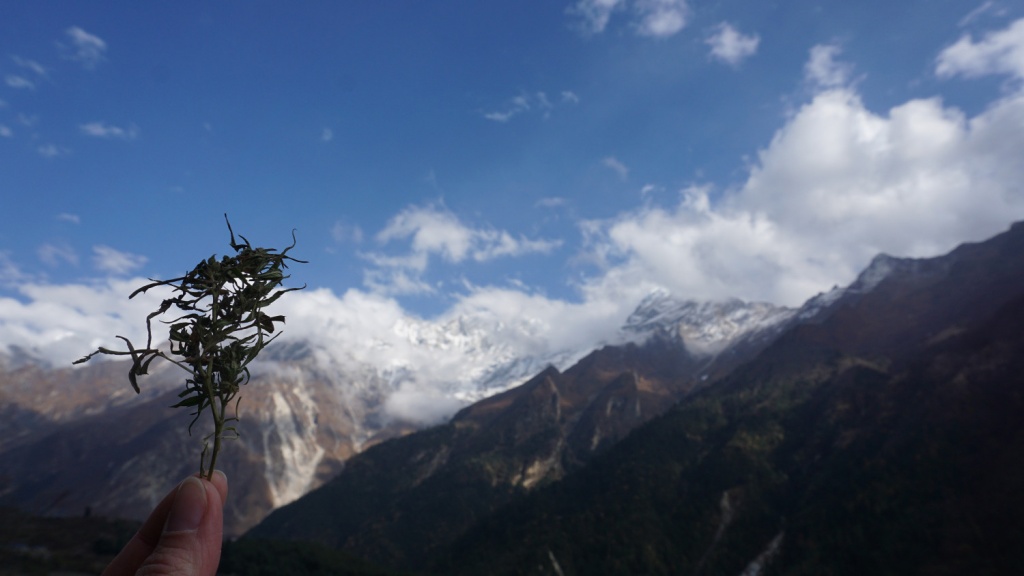
Piece of weed with a view
Briefly how it went down day by day
Day 1: took a bus from Kathmandu to a village. Bus picks up people, then stops for gas. Otherwise all is good. We see children playing by the main road, women picking vegetables/salad leaves that are fully covered in dust by the roadside. I likely have a fever so take a nap as soon as we arrive.
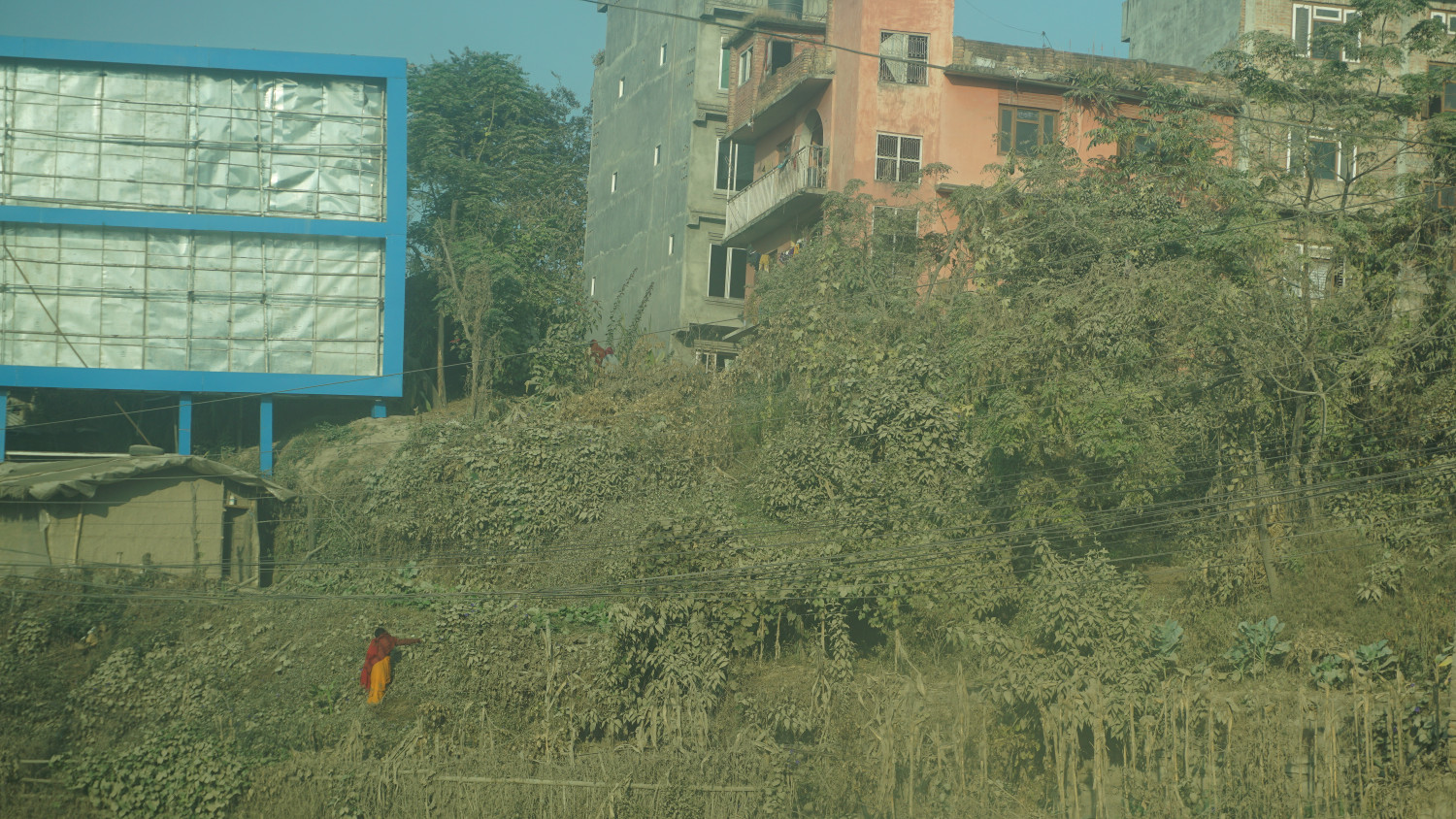
Day 2: guide suggested we take a bus further otherwise we need to walk on the dusty road with traffic for 4 hours. Sounds really good. So we only trek for 2 hours, which is good for my health to start slow. We stay overnight in the same place where Prince Harry stayed some years ago during his visit. Very cozy place. Temperature is nice and only need a jumper to sit outside in the evening.
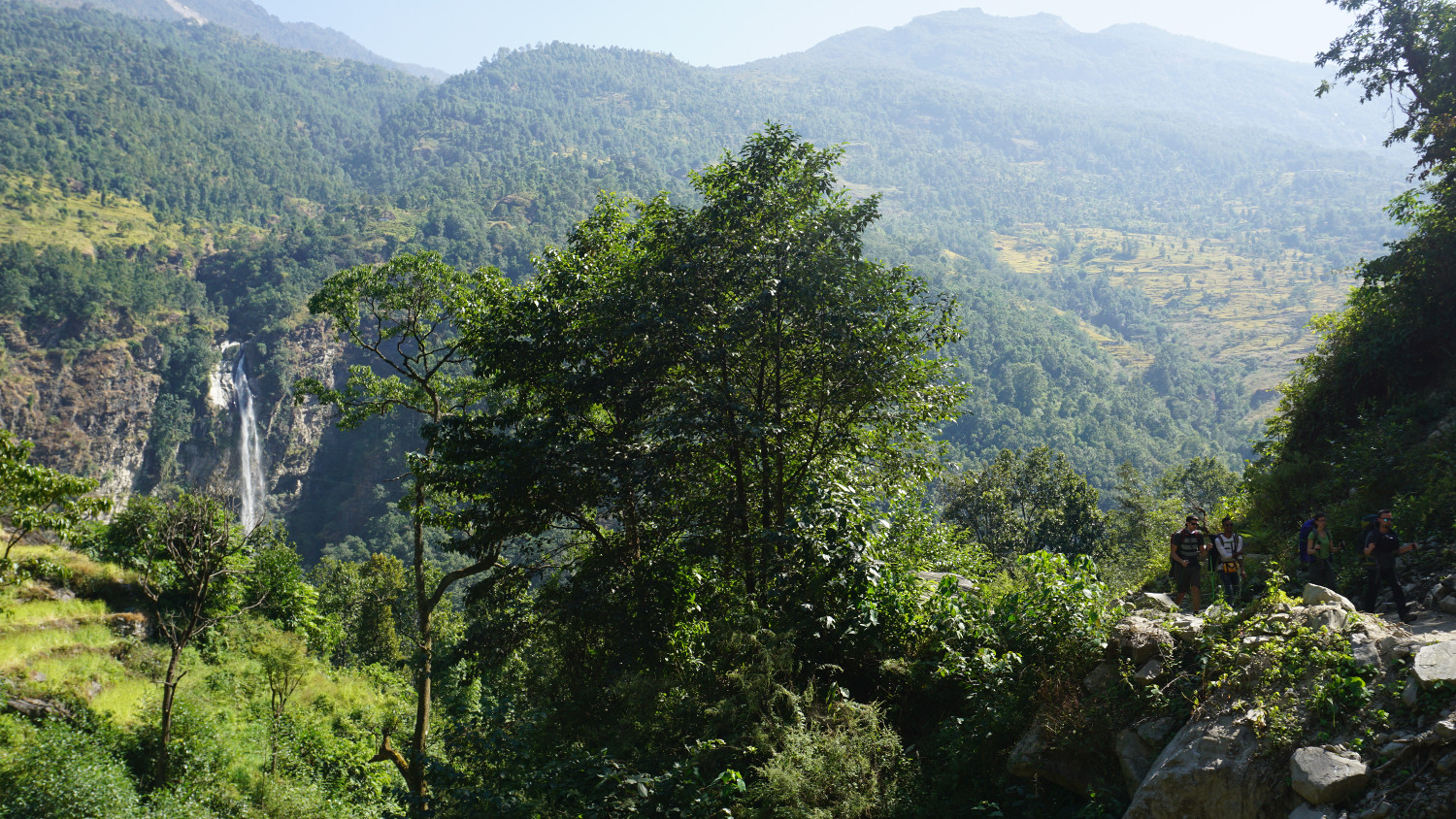
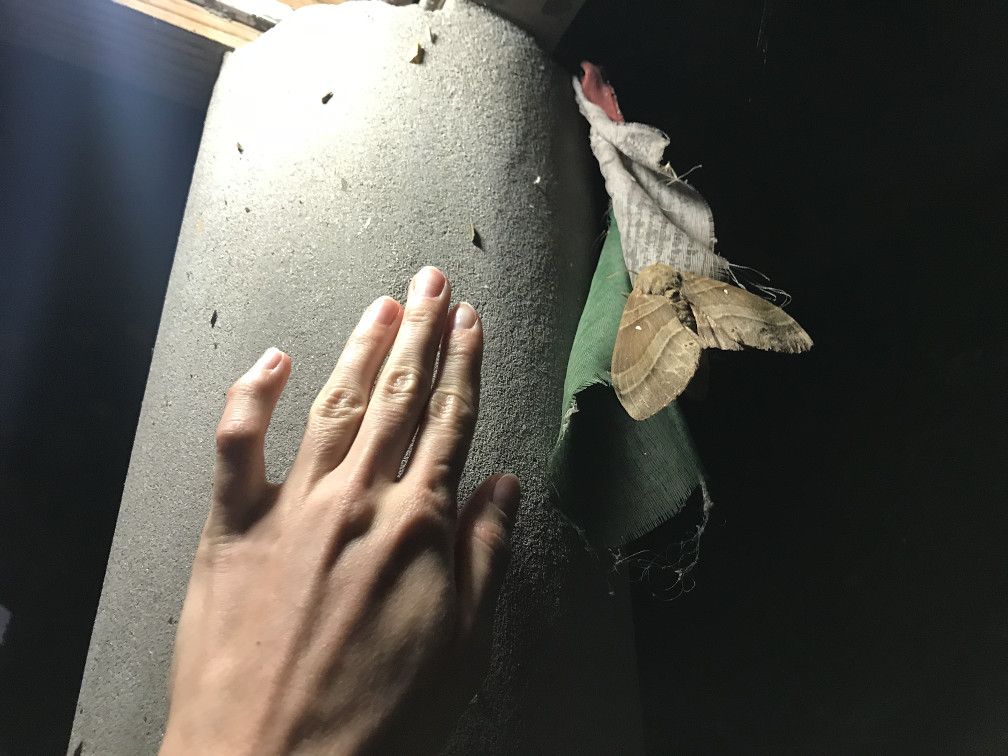
Day 3: first long day of walking. This is not so bad. Feels like we might be able to complete this easy. The moths a huge here – a local calls it a Nepali airplane.
Day 4: remind me why are we doing this again? Stairways to heaven are showing us our “fitness” levels physically and mentally. You question your life choices climbing up those.
Cookies and Pringle’s are tempting me. It’s funny that if we would do only this tour as our travel I would buy all the cookies I want. But now that I know that for those 4-5 dollars a packet I can get many dinners or treats somewhere else, I fight the urge.
Day 5: There’s no reception anywhere so if sth happens how will the helicopter be called? We overnight in a beautiful Tibetan house in a small village. Views are breathtaking.
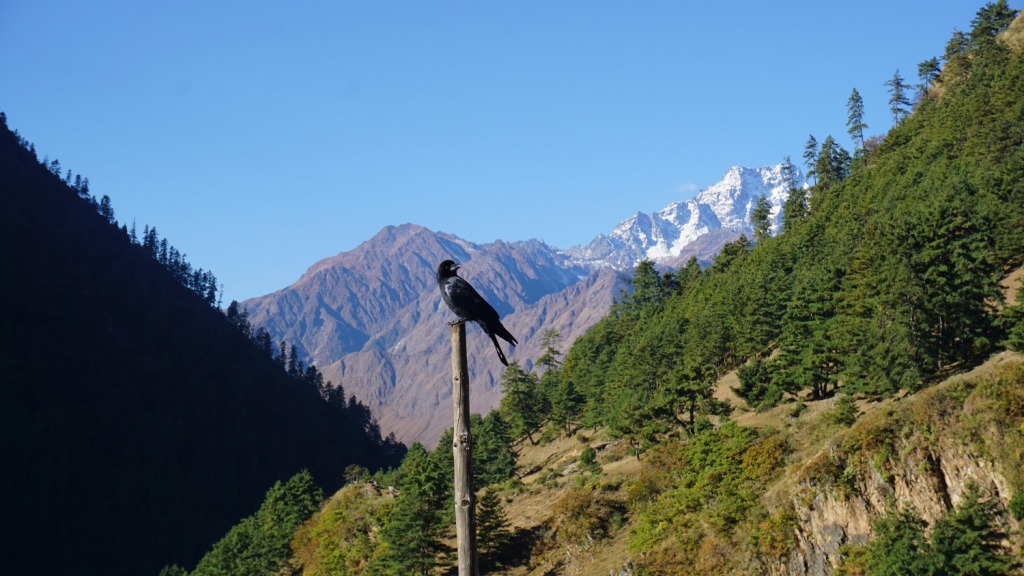
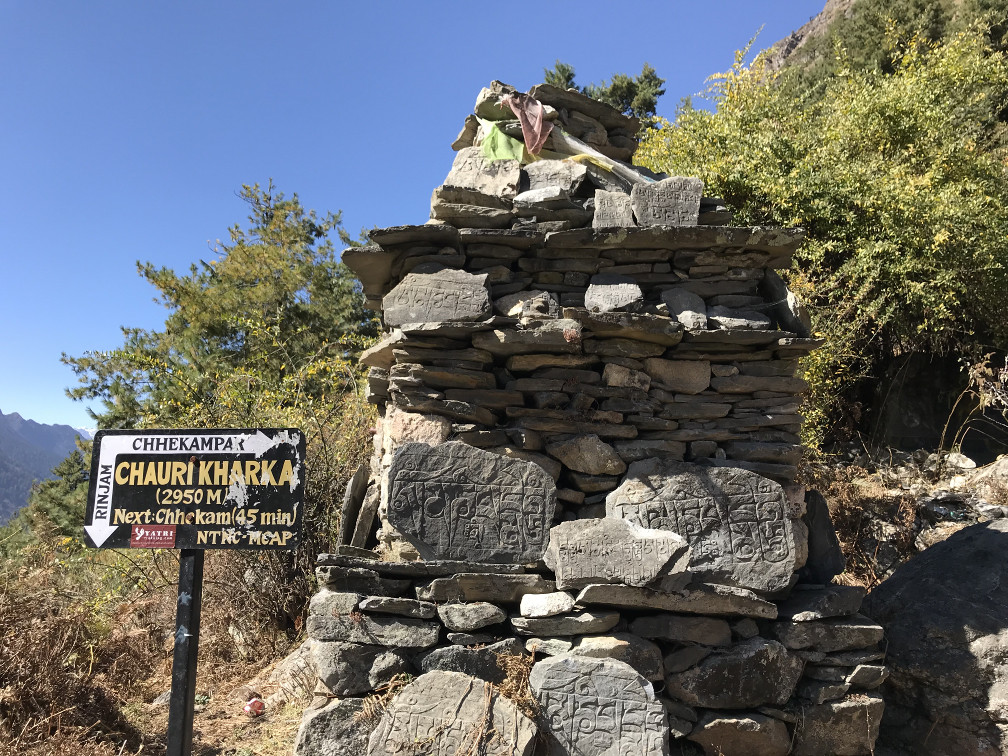
Day 6: We got to the place at noon where we were supposed to have lunch. But there was no village, not a single building, only one sign. Starving we were saved by the Dextrose we had with us (Thank you Justina and Martin for the gift!) and half an apple each our guides chopped for us. And we shared a Snickers to make sure we get to the dinner place.
Day 7: It was an easy, rather flat walk to Nile. We got there before noon, so decided to do the hike to Mu Gumpa after lunch and it worked out perfectly. Much better than going tomorrow morning. In the evening we tried the local raksi before dinner – rather strong alcohol, tasted like Chinese rice wine diluted down with hot water. I need some alcohol to get rid of this killing cough and for all the bad bacteria to die.
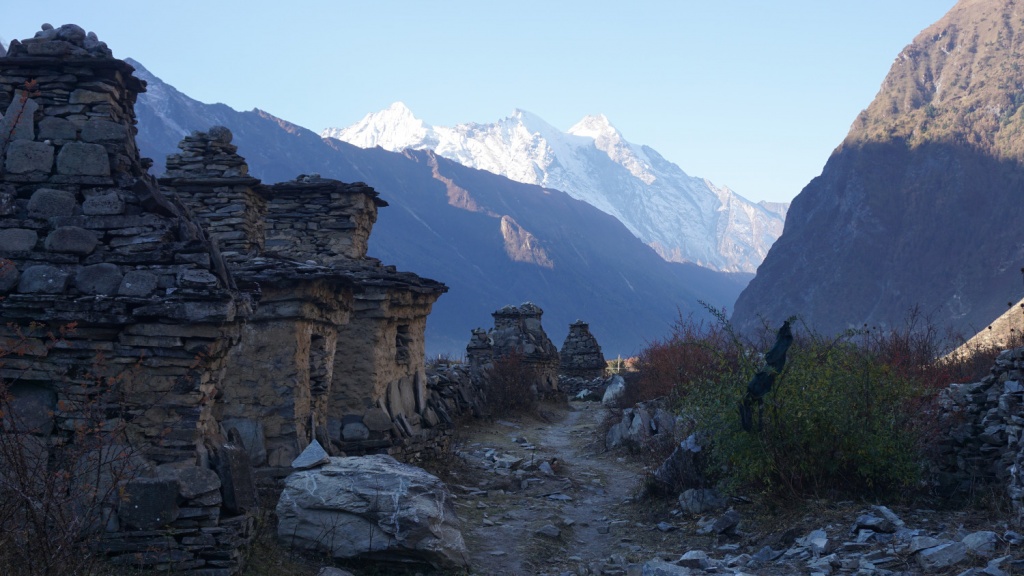
Today’s pretty path 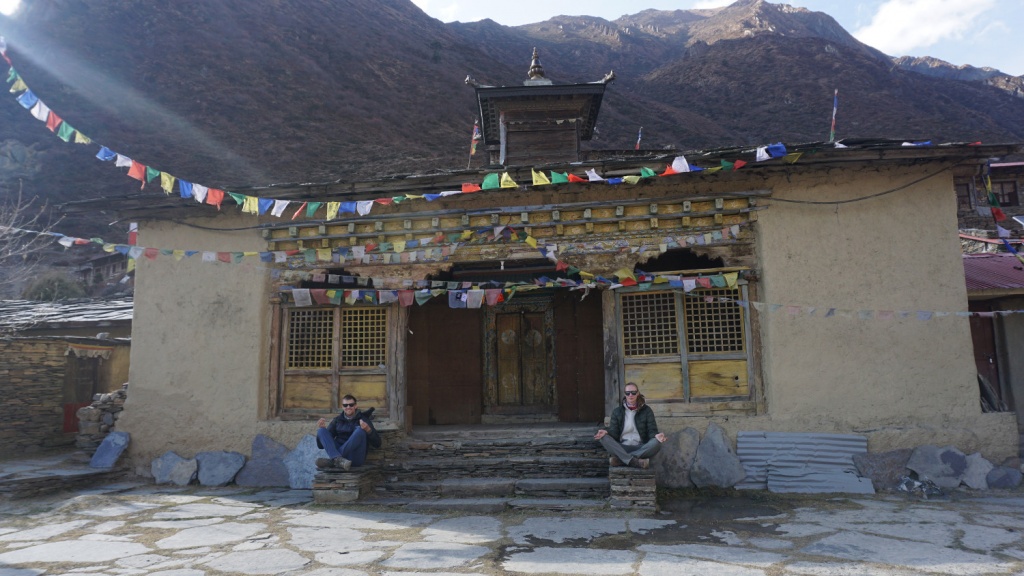
At the monastery 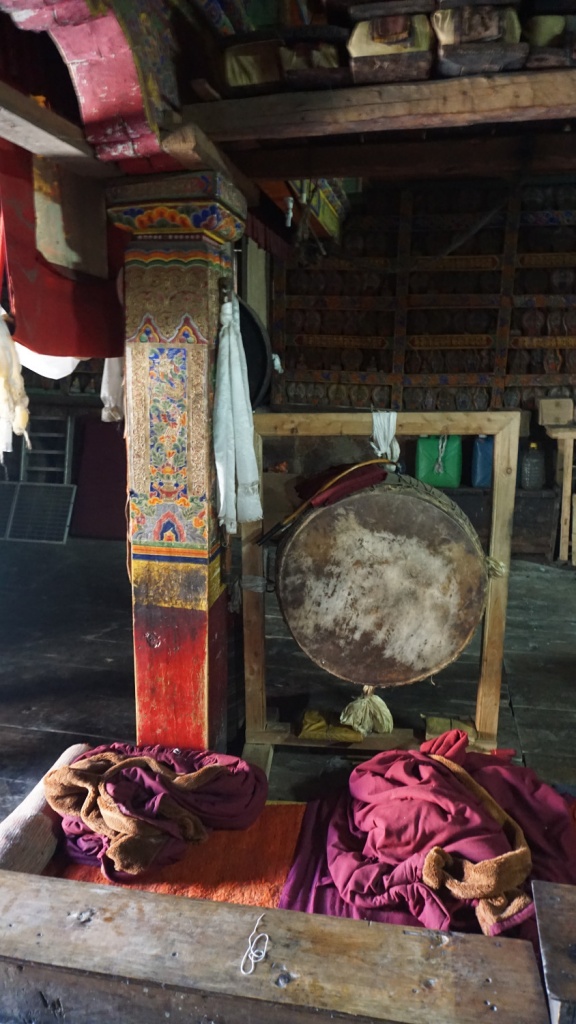
Monks disappeared 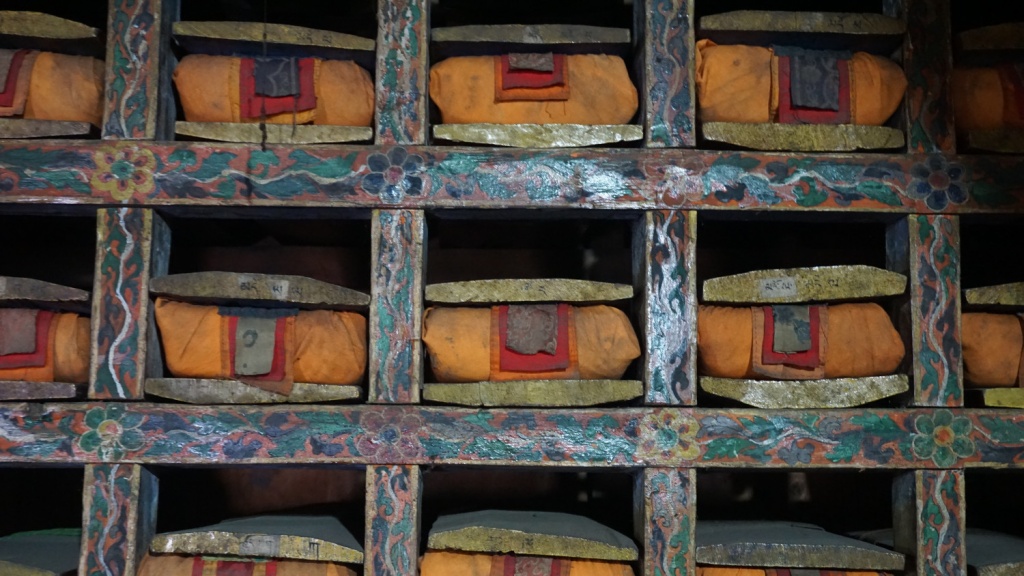
Books
Day 8: First proper night sleep wo the help of pills. Week of coughing and sinus infection has been annoying. Seems to be finally ending. Was it the strong local raksi that helped? A nice easy walk till lunch and then the days of decent started. I like going down more as it’s harder on the legs, but doesn’t make you out of breath (especially important when you can’t breathe through your nose anyway). Some parts are pretty dangerous though, so from risk aspect going up is much better.
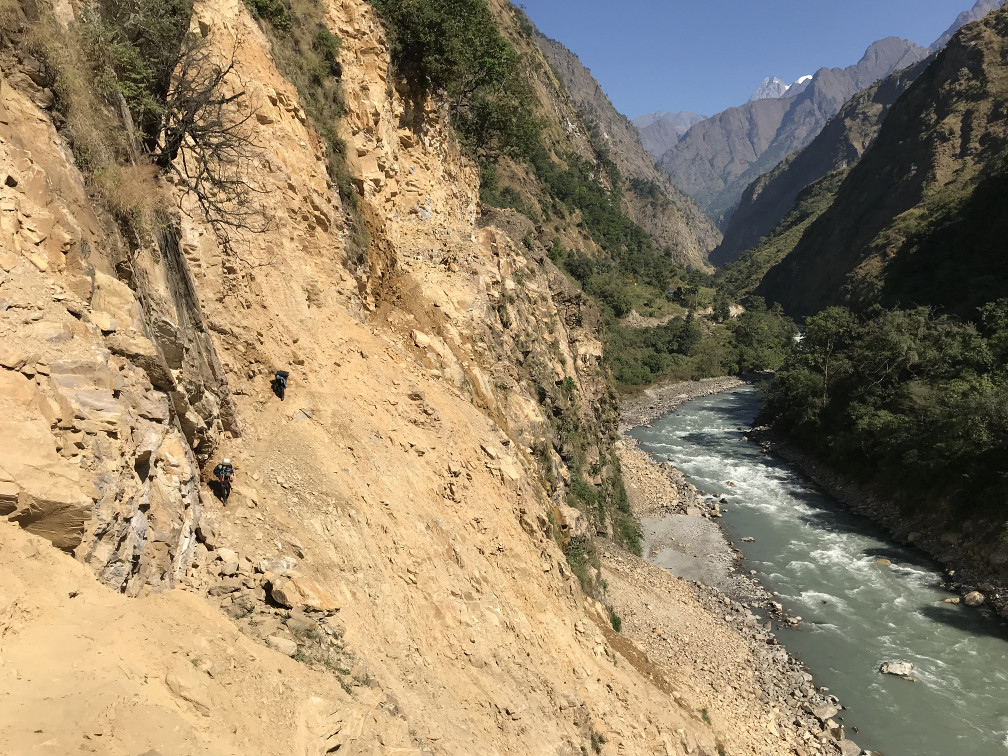
Day 9: The cold is still annoying. The skin under my nose is broken and is starting to hurt. But it’s nice we descended back to heat. Passed over to Manaslu side, going uphill starts again. We had a short day and parked in a place with no showers.
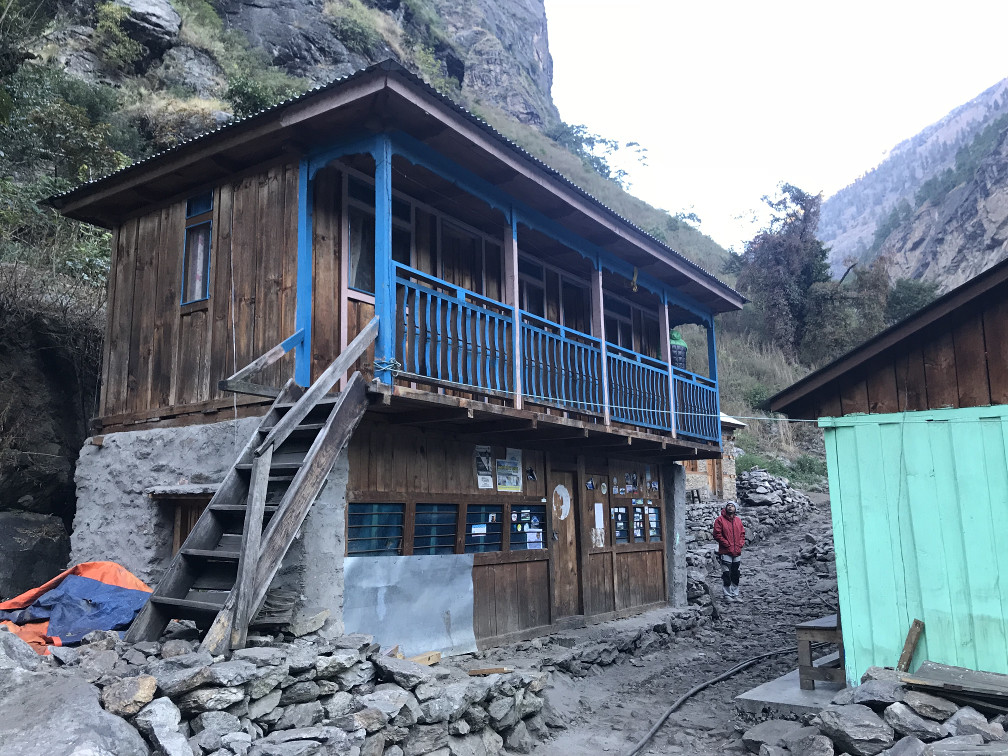
Day 10: V wakes up early with poisoning and diarrhea (edit: we later found out that other foreigners also got food poisoning from the same place. The amount of flies were alarming, but as it’s the only place to eat at you can’t say no). We still trek further to the next town, but stop there. V measures a temperature of 40.2C, I check mine for fun and get 37.6C and upper stomach seems to disagree with food and causes pain. Almost passing out after dinner. We don’t know if we can continue or have to walk back down – choose your health and go back or push yourself and go forward?
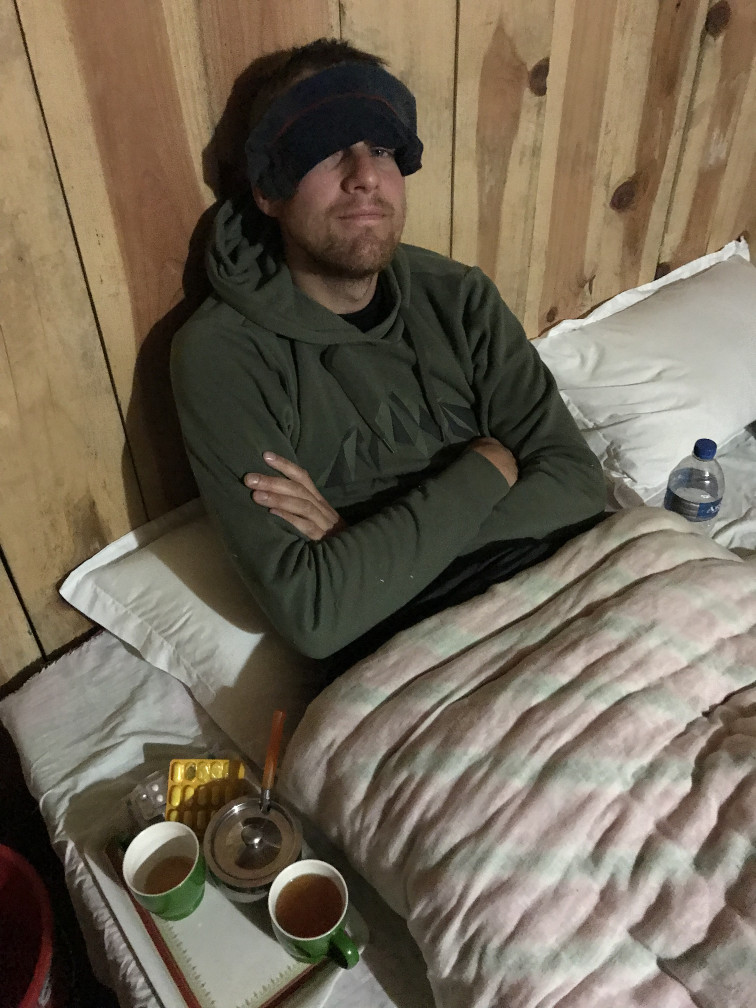
Day 11: Luckily the high fever is gone, but we take a rest day. My legs need the rest too as calves and muscles around the left knee are pretty painful. My feet wouldn’t heat up for 4 hours so we pour hot tea into my water bottle and create a hot water bottle for my feet, recovery starts.
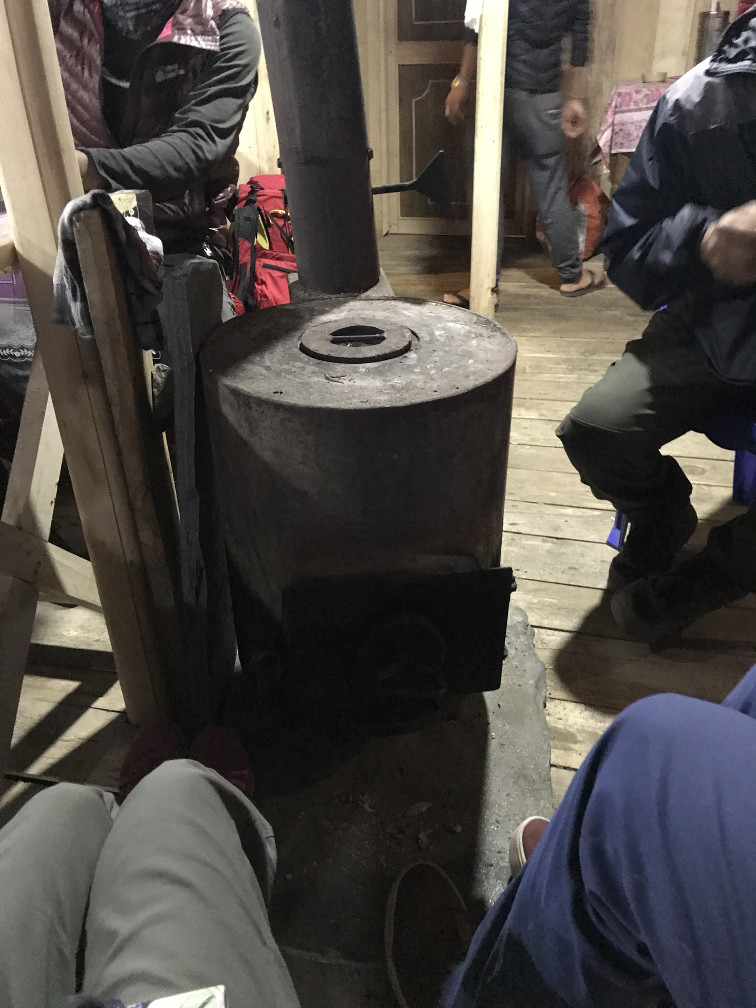
Day 12: We continue. Slowly, but rest day helped a lot. Best dal bhat at Gho lunch place. We decide that going forward we only do hikes that are shorter and in warmer countries or where they have proper heating. Some random muscle on my left leg is still being a pain. I hear a German woman say at lunch she has such pain in the leg she would like to cut the leg off. I feel the same. In the evening we are positively surprised: we can take a warmish shower and there’s an oven in the common room in front of what we spend 4 hours. Life is looking brighter. Restart has been successful.
Day 13: There’s only hot water everywhere in the morning, so sitting on the toilet you feel the hot water steaming your ass. 😄 All of the sudden not a lack of it. Don’t know what happened.
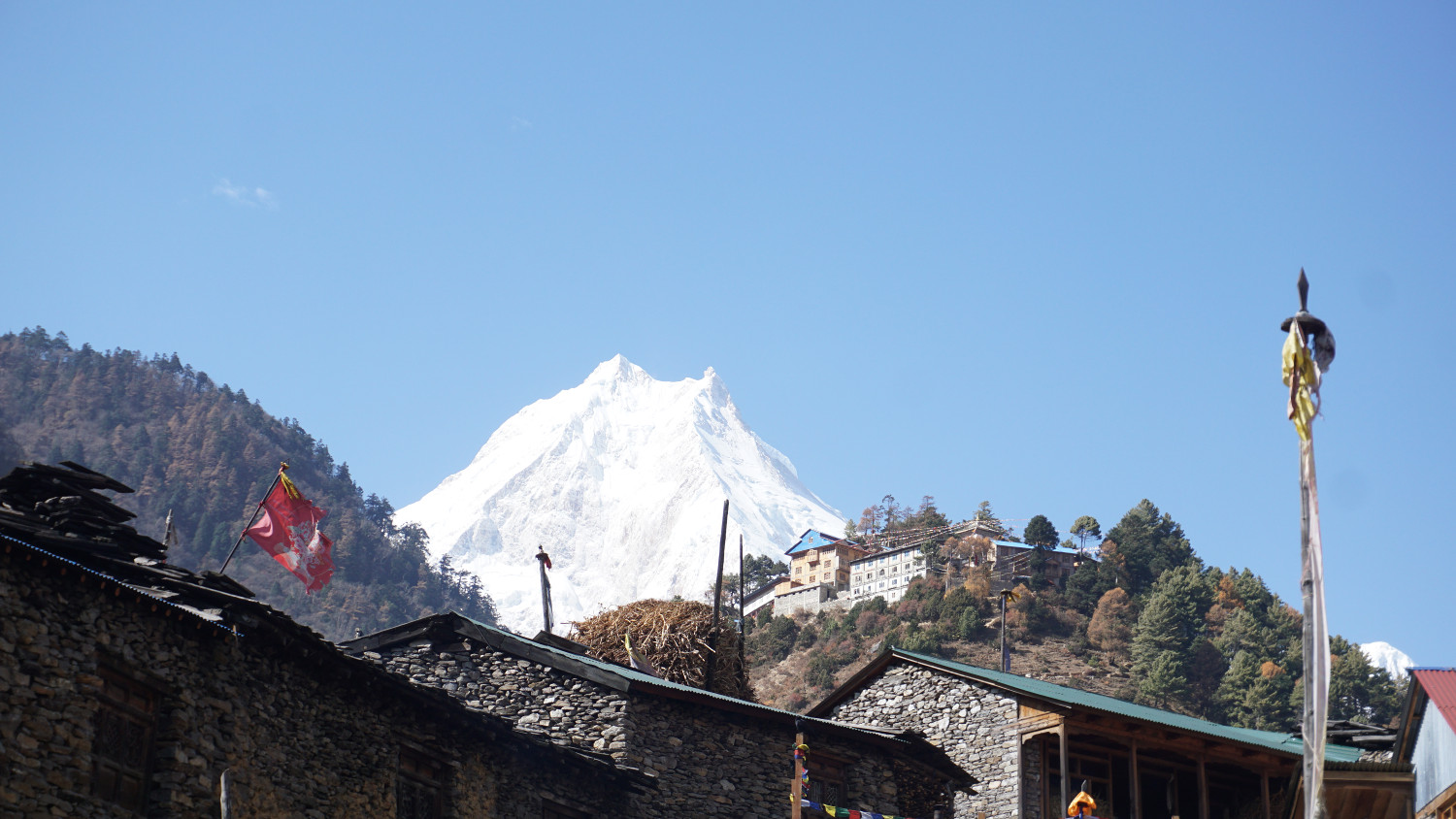
It’s getting colder, but we have a good early start. Heat from last night has been motivating. Families are moving down the mountain as it has started snowing up. We keep moving up. 3 weeks trekking seems to make us too angry and frustrated, shorter trek is probably a good idea. But lunch place has a nice “patio” that is warm and feeds our starving stomachs. We have a long day and catch up with the itinerary. On the way we finally have a view on Manaslu – the mountain we are circling. Gorgeous! In the Himalayas the funny thing is that you keep going up and up and up, but you never reach the top, the viewpoint overlooking the land. There’s always higher peaks surrounding you, another 4k up.
Can’t believe we made it to Sama! Samagon is full of trekkers, all good hotels taken. So we go local and chill by actual fire in the evening and eat in the kitchen. We found a cafe that serves excellent and sweet hot chocolate and the staff was great! Sat in front of the oven there for a couple of hours.
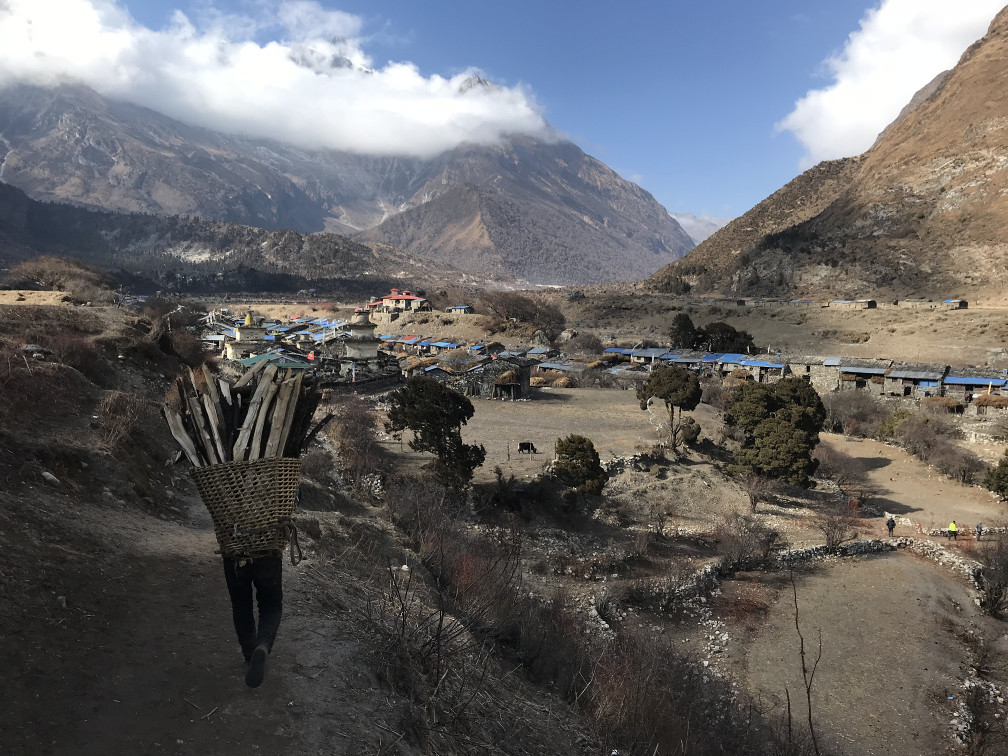
Samagon 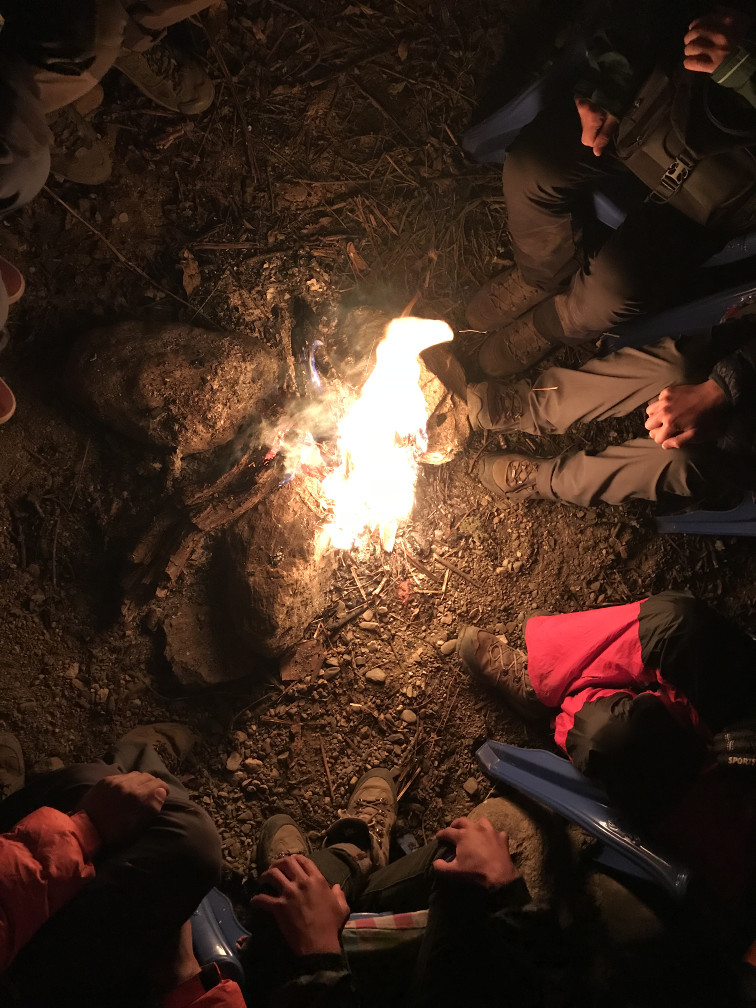
Sitting by the fire to keep warm 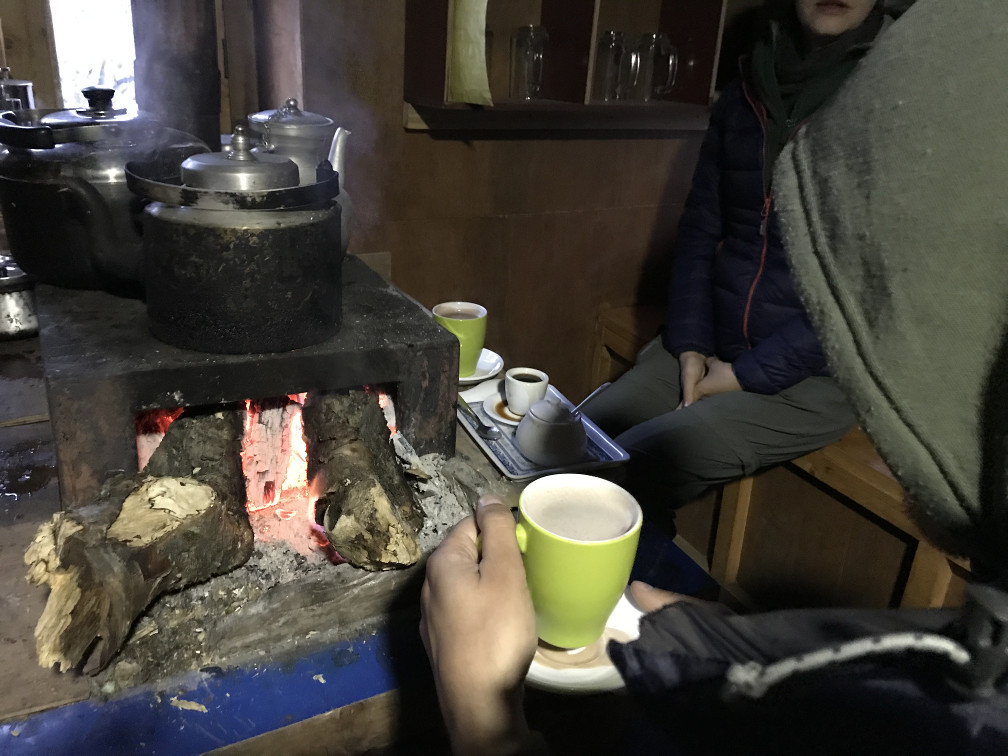
Super tasty hot chocolate at a cafe 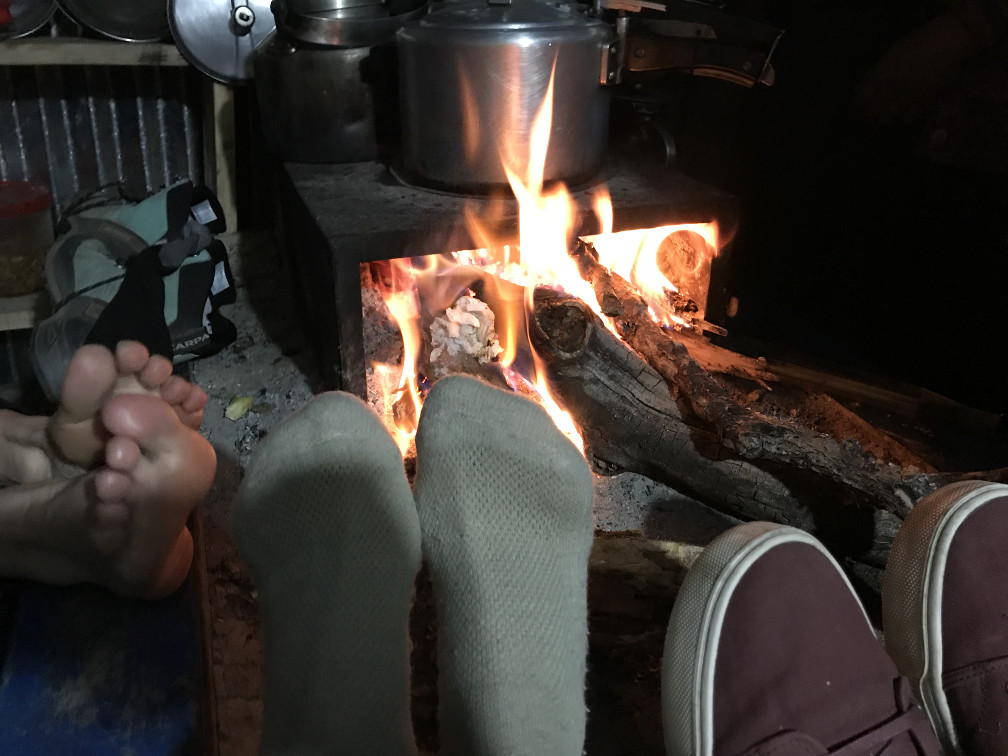
3 levels of cold by the oven in the kitchen
Day 14: We wake up, it’s all frosty and icy around. I do my washing and freeze my fingers. But the sun comes out and it’s beautiful. Our rest day includes 3 hours of hiking up to a monastery and 2h back. Snack break at the beautiful plateau and managed to take our naked ass pics with the world’s 8th highest mountain Manaslu that we are circling. It was a very nice walk for the day.
My altitude tolerance seems to be good, feel like I could run up. V needs the acclimatization day and Robert feels like he’s had a couple of beers (sounds fun!). We have hot showers (very bad pressure and cold room, but the water is hot), probably last ones till the pass, there’s an oven, it’s warm, we have ginger lemon honey tea and I enjoy an excellent apple pie for dinner. It’s lovely. I like this life.
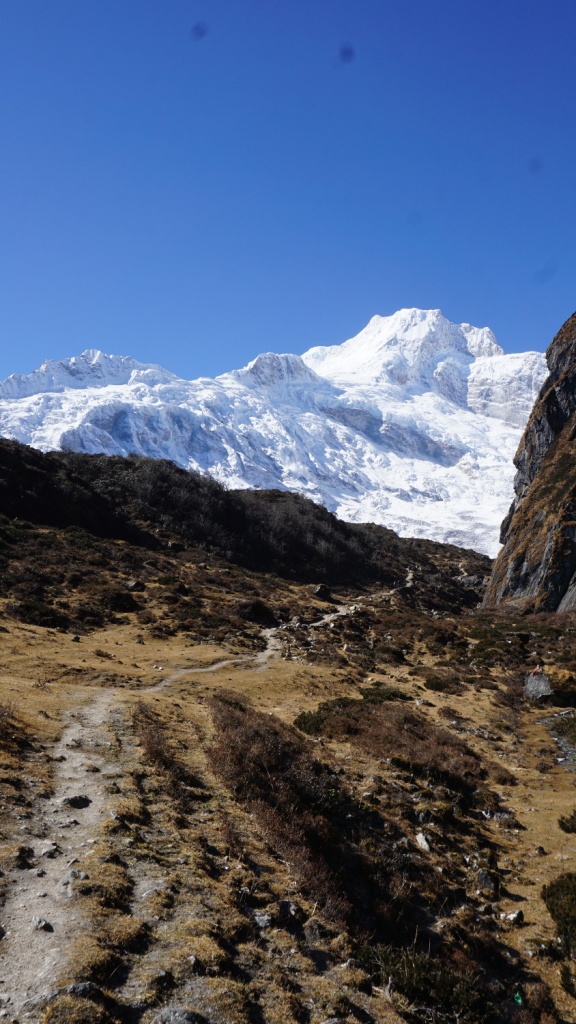
The path up towards monastery 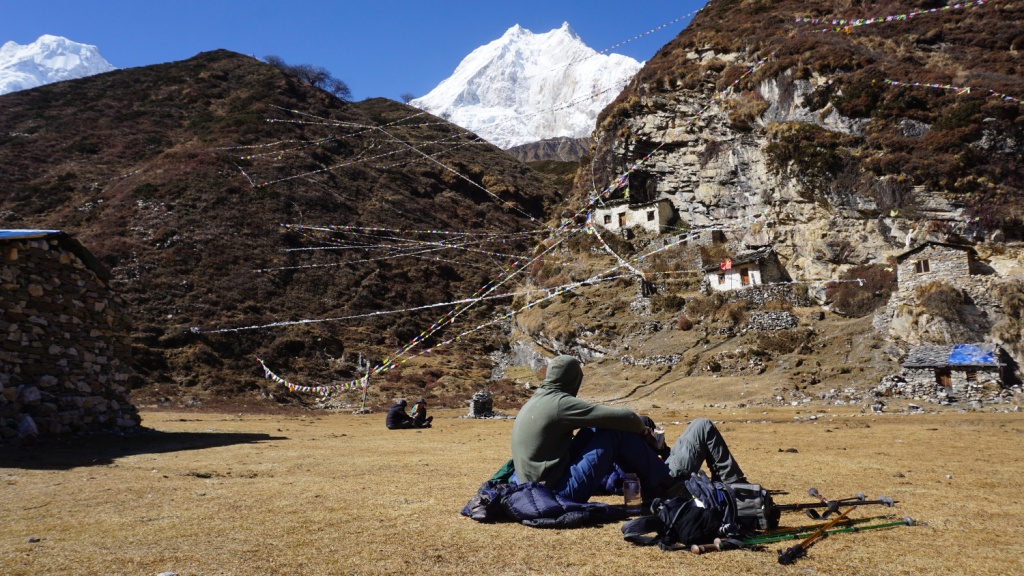
Monastery and Manaslu peak 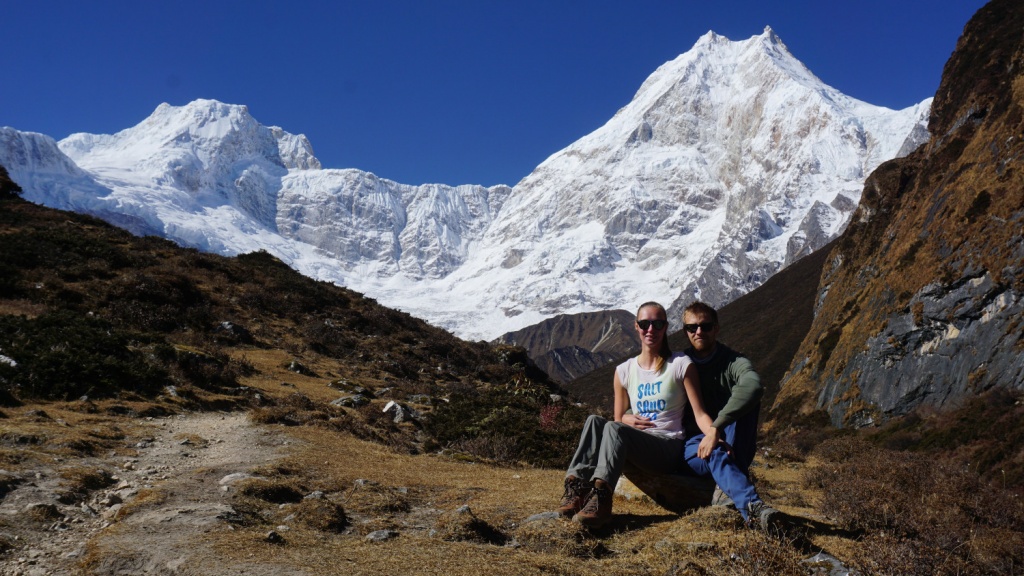
With the world’s 8th highest peak
Day 15: It’s snowing a little. We were lucky with weather yesterday. Going up for more snow. I enjoy the hike, maybe also more as I feel really good and others are suffering from the altitude slowness. Hiked up the hill ca 300m from the accommodation to acclimatize better. Little snow falling, the amazing silence that comes with it.
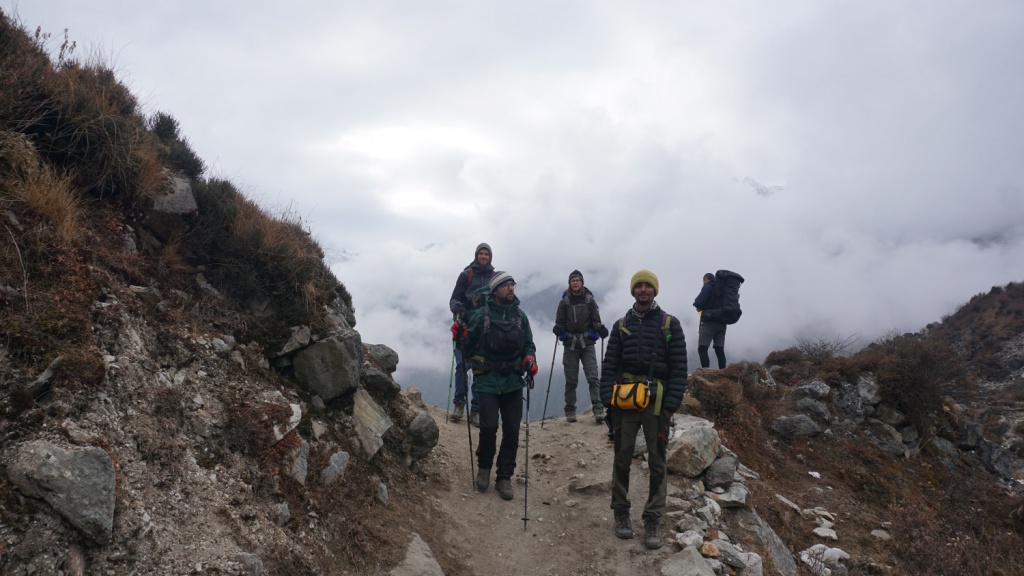
Group climbing higer 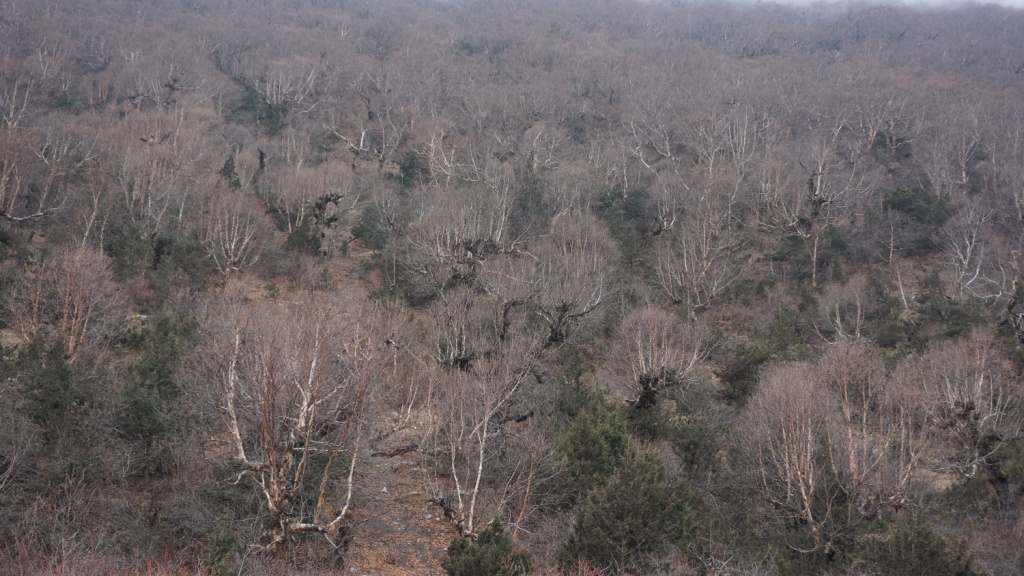
Interesting forest on the way 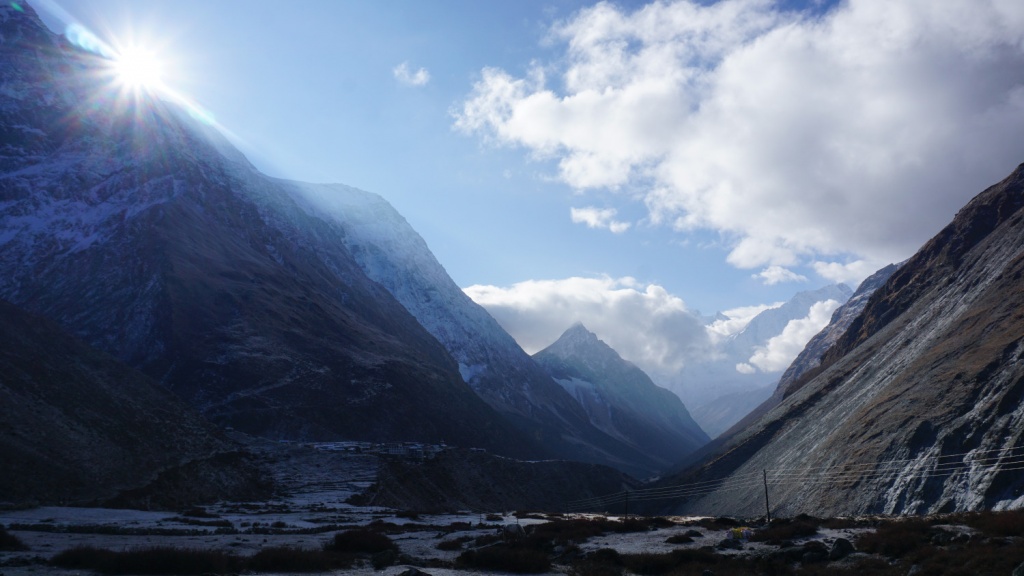
Sunrise on the village we overnighted at 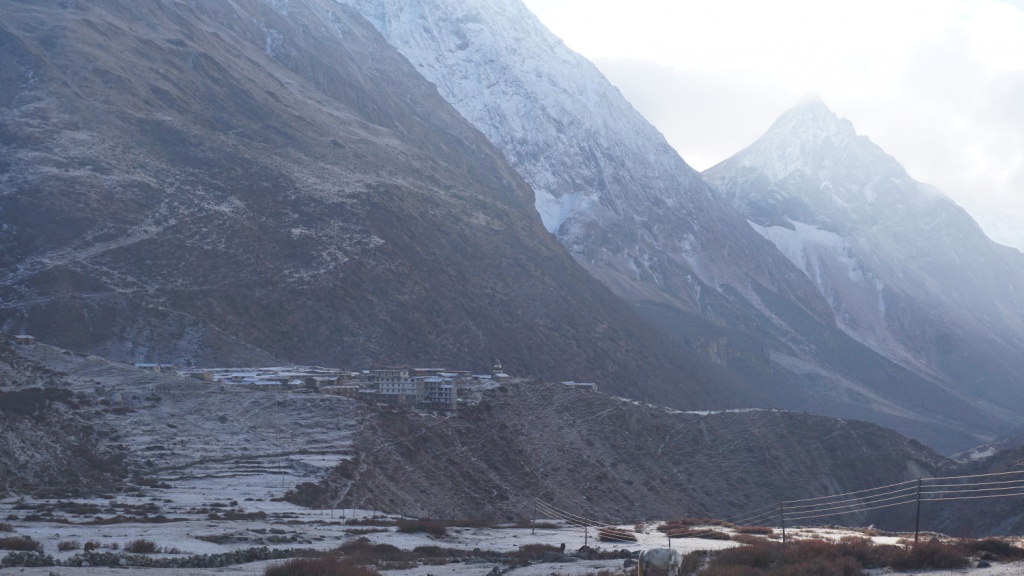
A village in the mountains, we stayed here
Day 16: Going up further. Short camp as altitudes are increasing. I like the hiking, feeling good. Contemplating still to climb Kilimanjaro next year (even if V has decided not to). The sun is really warm, but wind is chilly, difficult to choose if to take some layers off or not. Accommodation is basic today, sleeping 4 in a row on stones and mattress. However houses are new so hopefully wind proof. Guides and porters, and also some tourists, have to sleep in tents in the snow. Toilets have frozen diarrhea. A French woman got helicoptered away the day before yesterday, an Australian man yesterday, so not everyone can pass the high altitude.
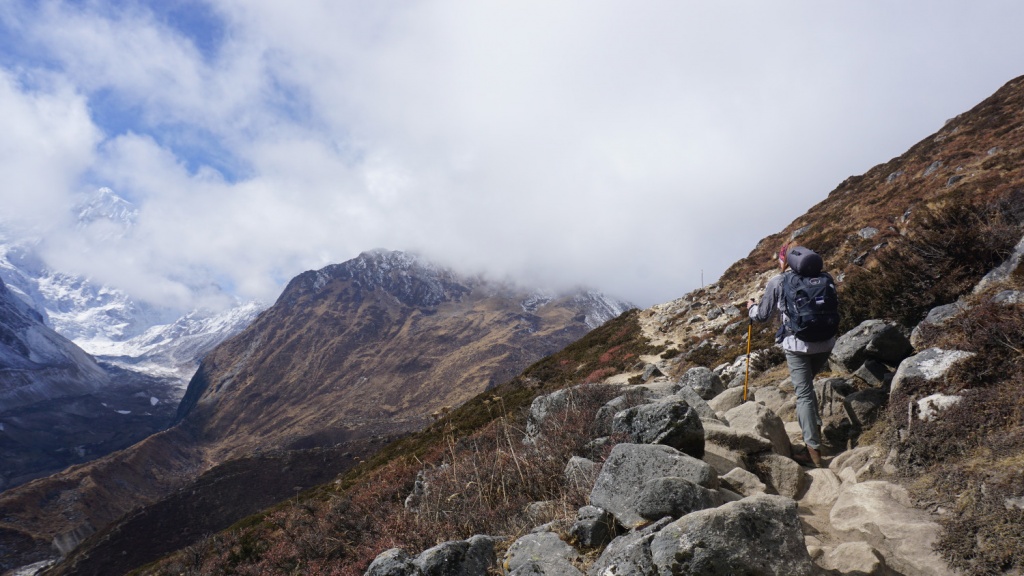
The path of the day 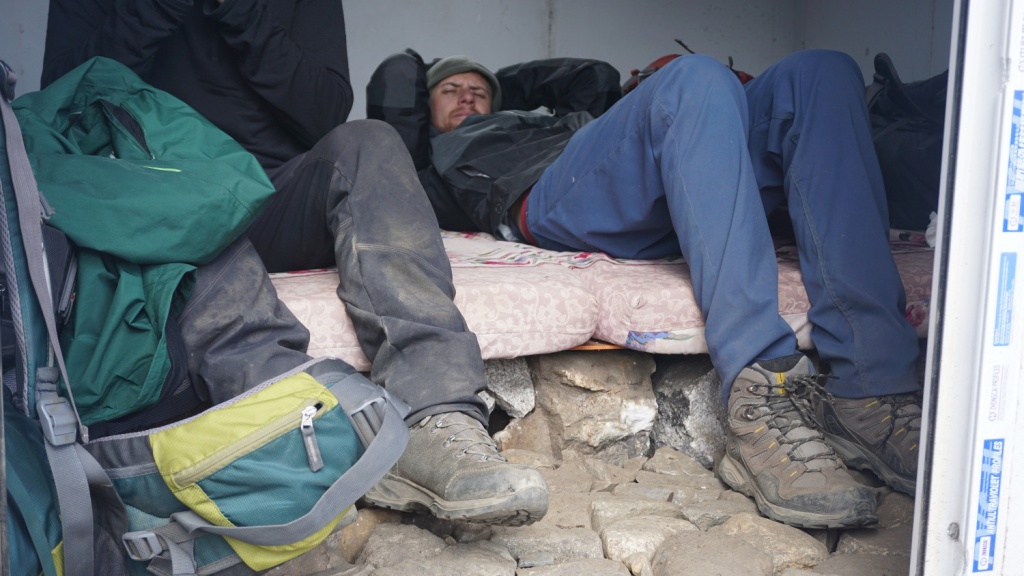
The room/bed we slept in/on 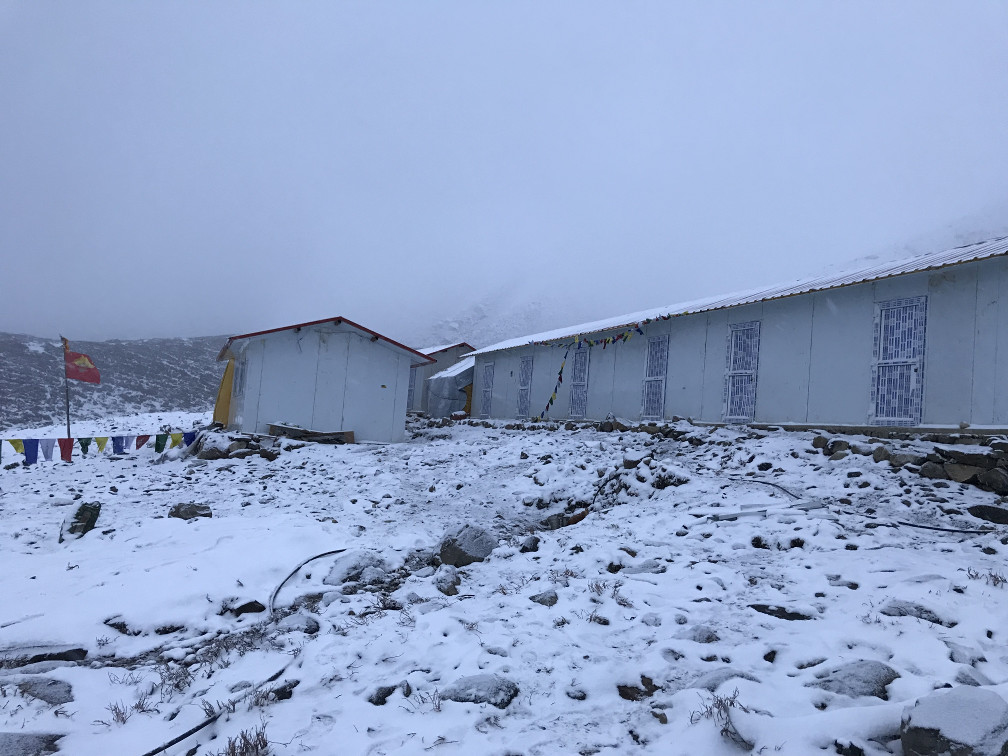
It kept snowing until everything was white
Day 17: No one slept well it seems. We have breakfast in red light at 3:30am and leave at 4am as we need to cross the pass before weather goes bad and the crazy wind comes. We walk the first couple of hours with our headlights on, in complete darkness on snow. The hands freeze after an hour as our gloves are not good enough, otherwise it’s very nice. We pause a couple of times to turn the lights off and look at the stars.
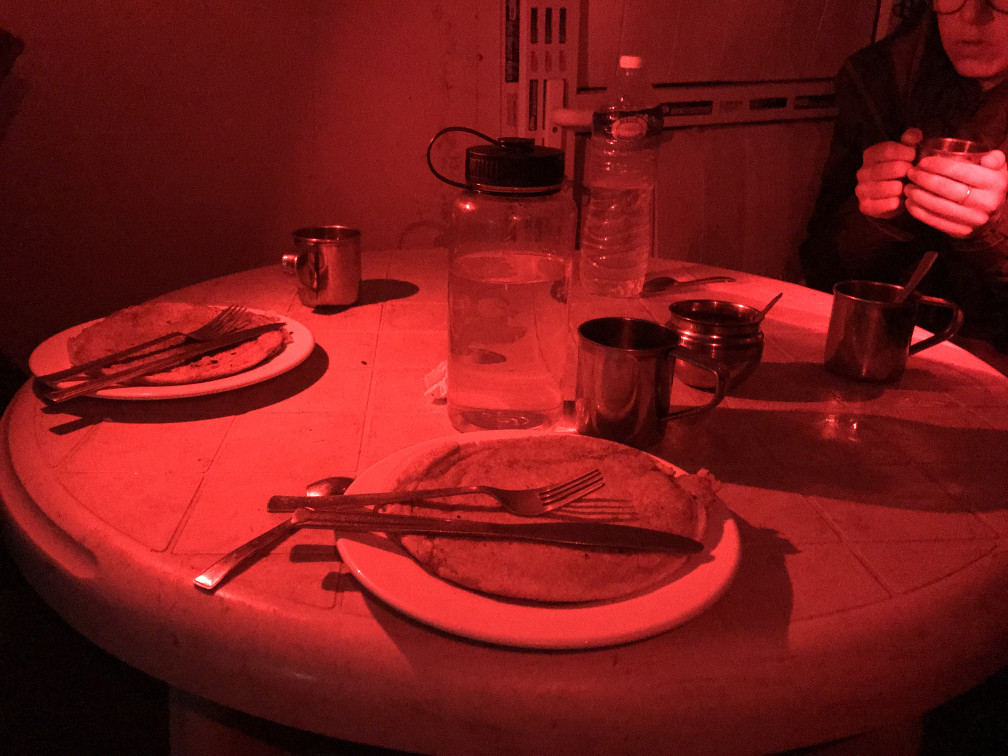
Breakfast at 3:30am 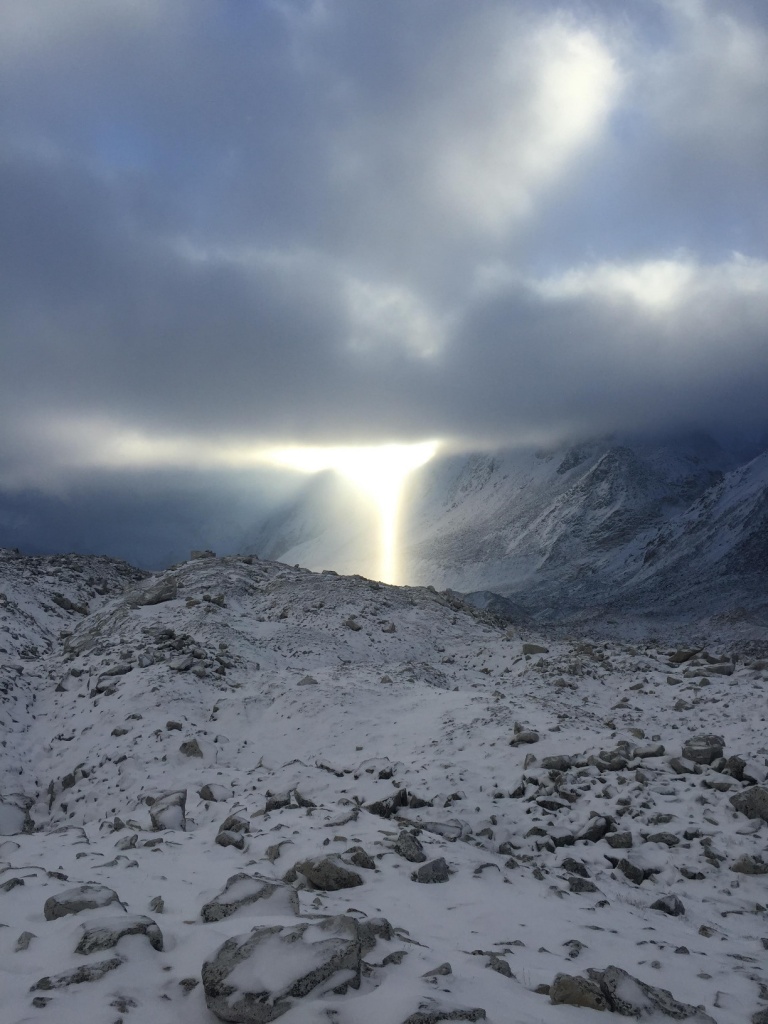
Dramatic sky at sunrise 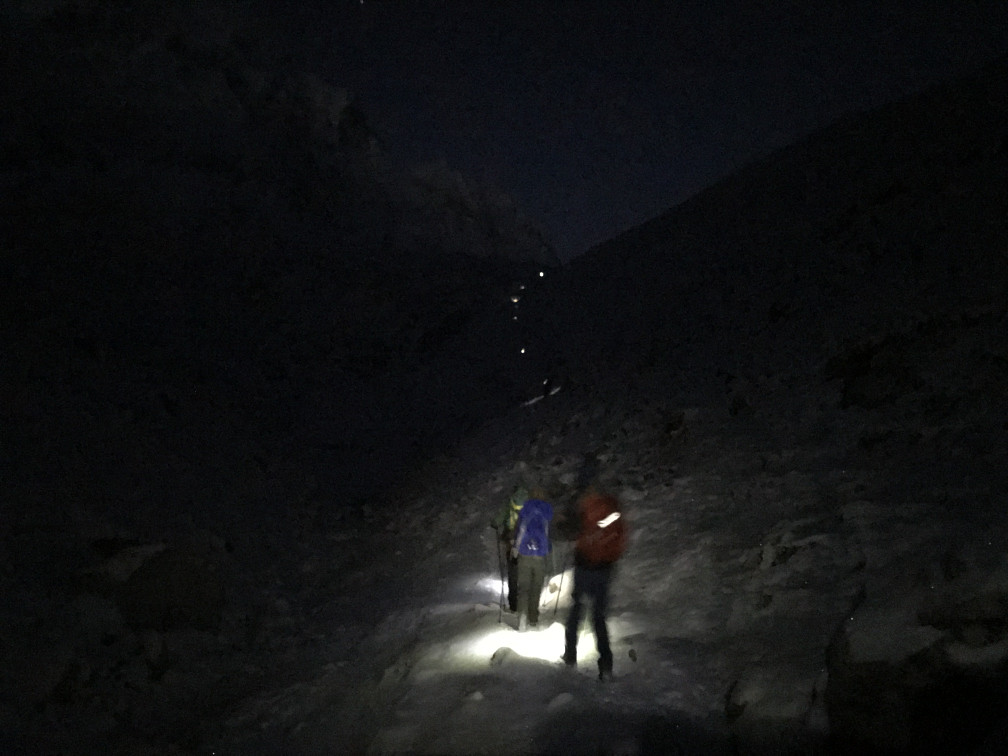
Walking in the dark was highlight of the trek
Then it goes light and we have an endless path of rocks in snow until we reach the pass just before 9am. We did it! Surreal. Through all the fevers and pains we made it here. It’s windy and cold but we take pictures and then run down to escape the wind.
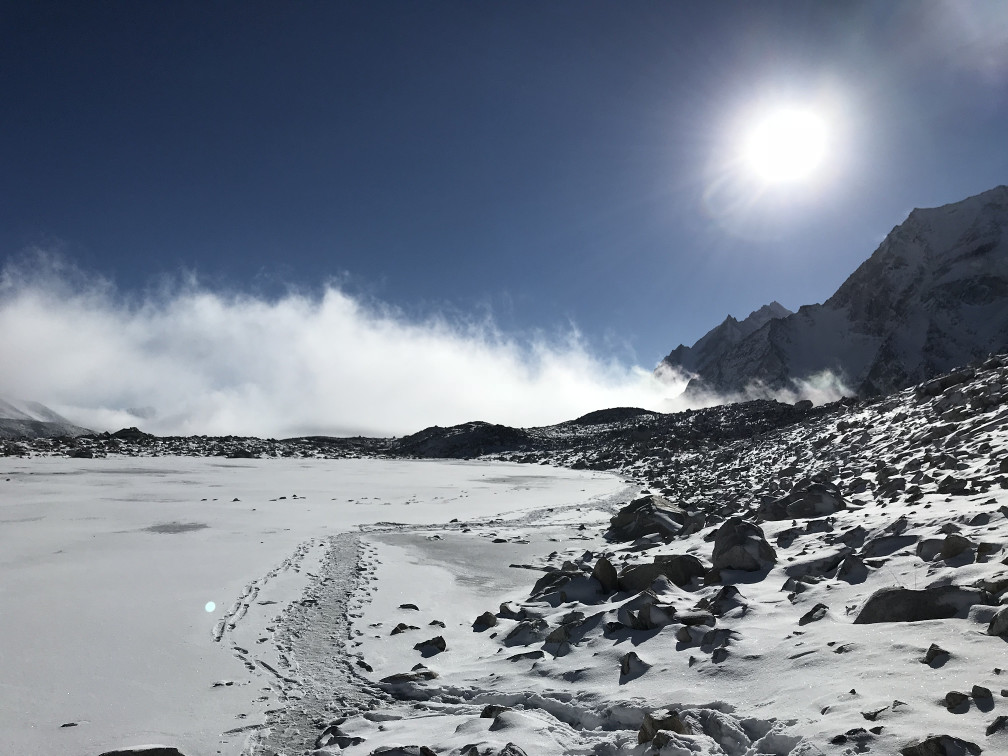
The endless path 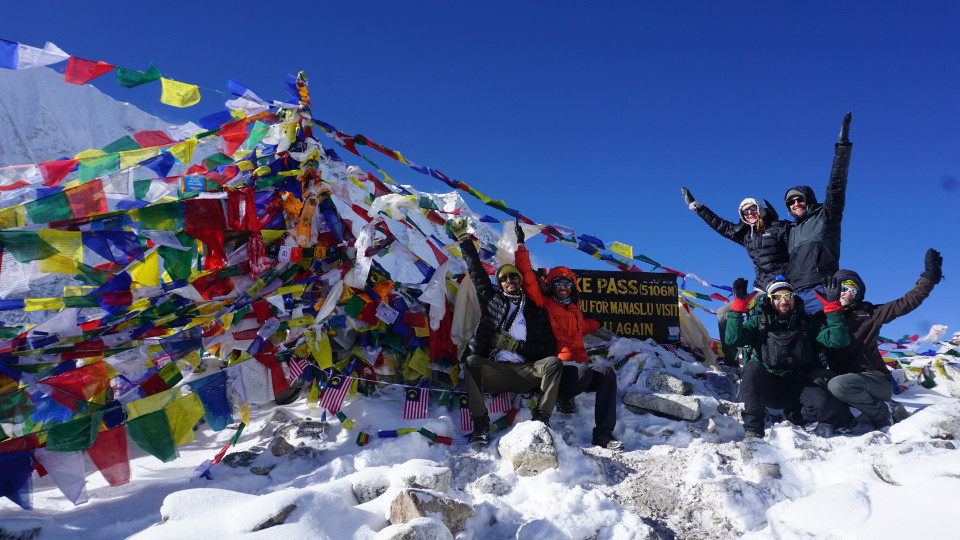
Everyone made it! 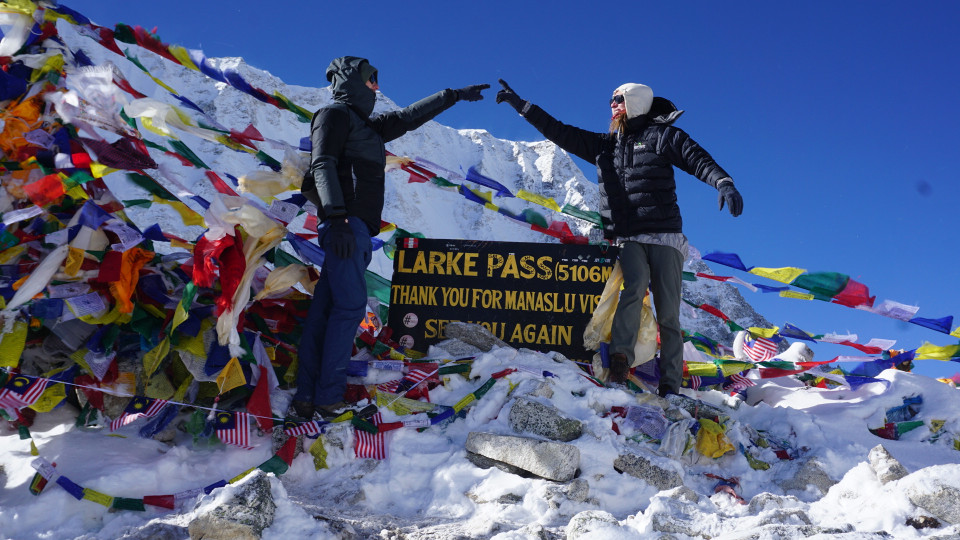
At the pass, together we can concur every mountain
We went up from 4.4k to 5.1k and then descended to a village at 3.7k in one day, total 9 hours of walking. My leg muscles are fucked but I go down fast as that’s easier than facing the agony on every step. I’ll deal with the consequences later. When we finally see the village I notice the mountain that sides it. I’m amazed! Big wow effect. Only in the Himalayas do I get such feeling when seeing these snowy beauties. They are magnificent!
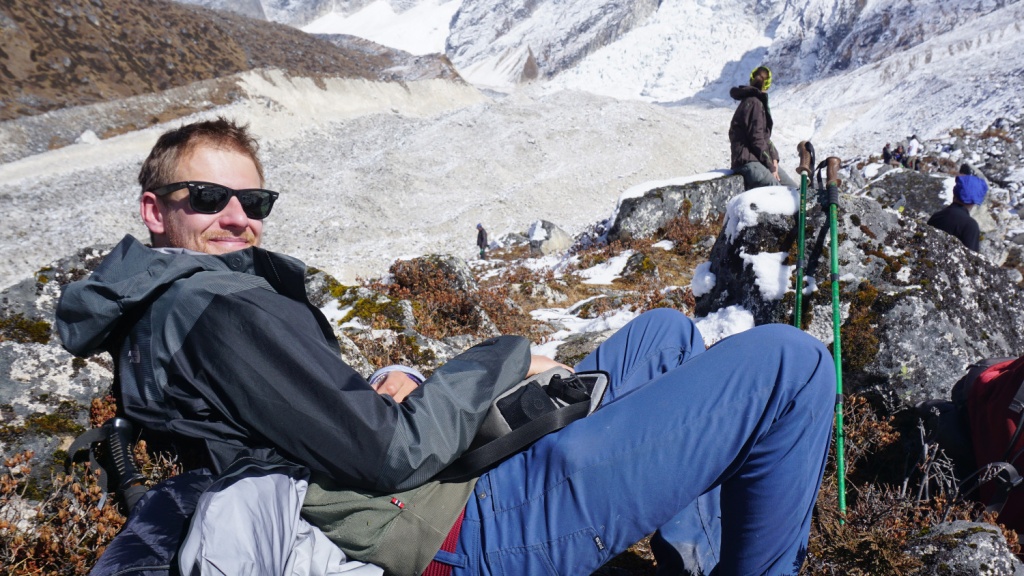
First break of the day, after the pass 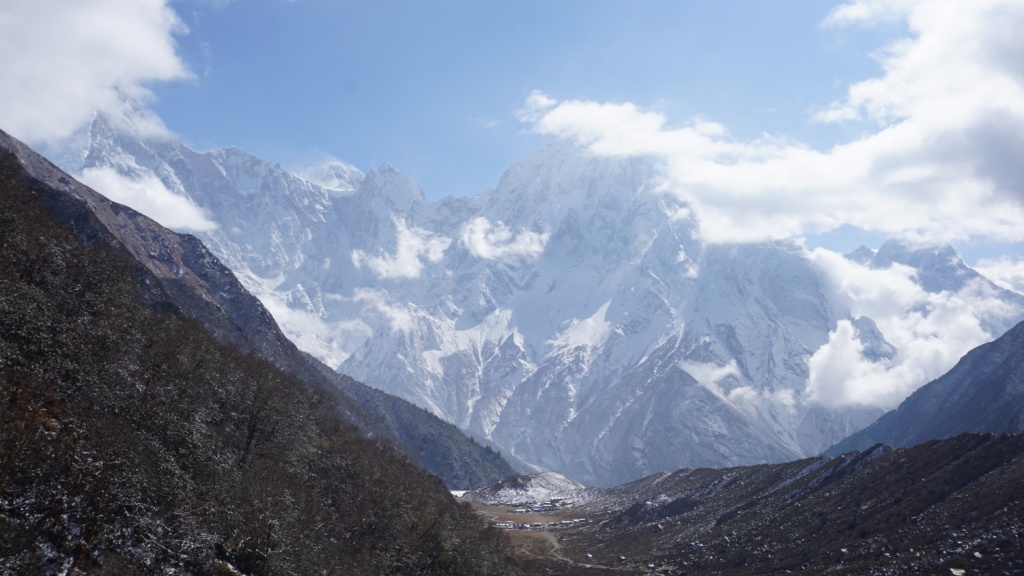
I was so focused on the village, then I saw the glorious mountain that rules over it
Day 18: 2 more days to walk down and that’s it with the trek. Feels very odd. The snow disappeared, we reached the beautiful forest and pleasant temperatures again. Amazing! Different smells, so good. Many goats and we pet a tiny one.
First beers in the evening and the most amazing tomato sauce for my veg egg spaghetti. People around are discussing their experiences in crossing the pass. It is a lot warmer to sit in the common room, no oven needed. Everyone is happy. We even have an en-suite toilet and shower! Even a western toilet. Feels fancy and luxurious. There’s no hot water so we postpone showering for one more day.
We talked to a british duo and they also go to India after, but to the Andaman islands to relax, so we are considering if we should copy their brilliant idea and start our tour there.
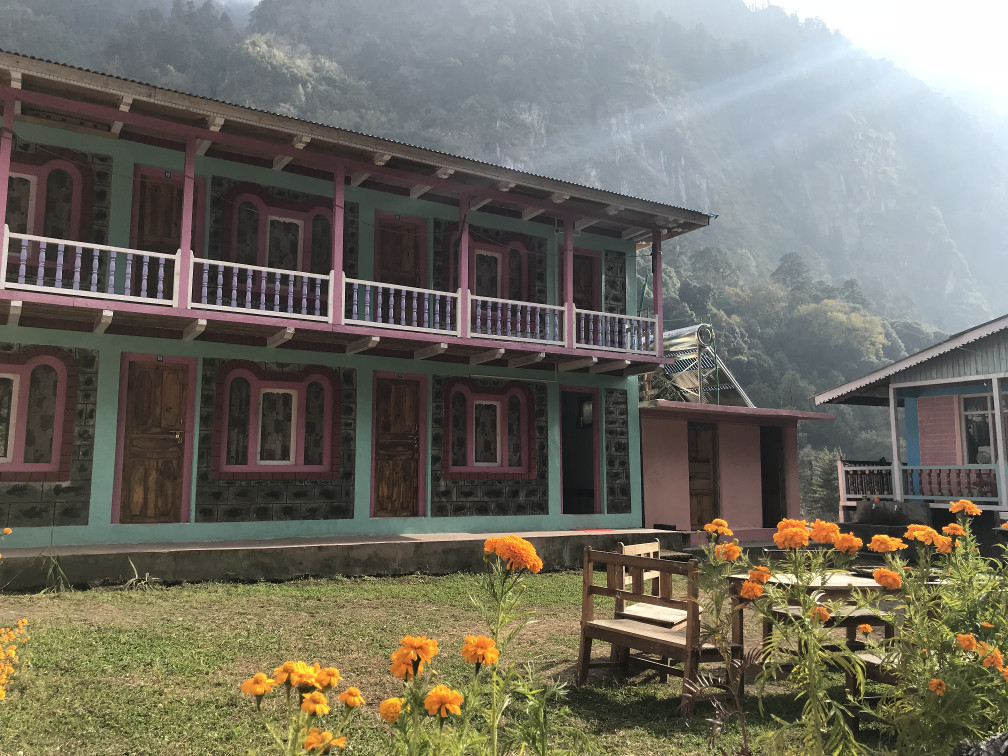
Many doll-house style actual houses on the way 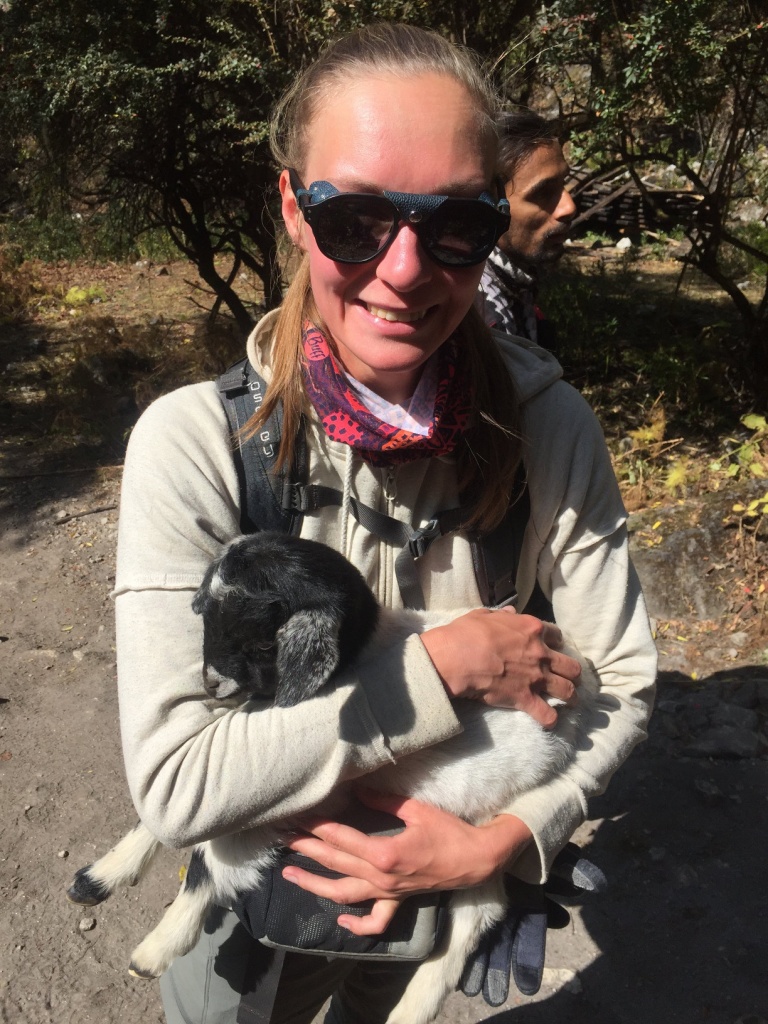
Petting a tiny goat 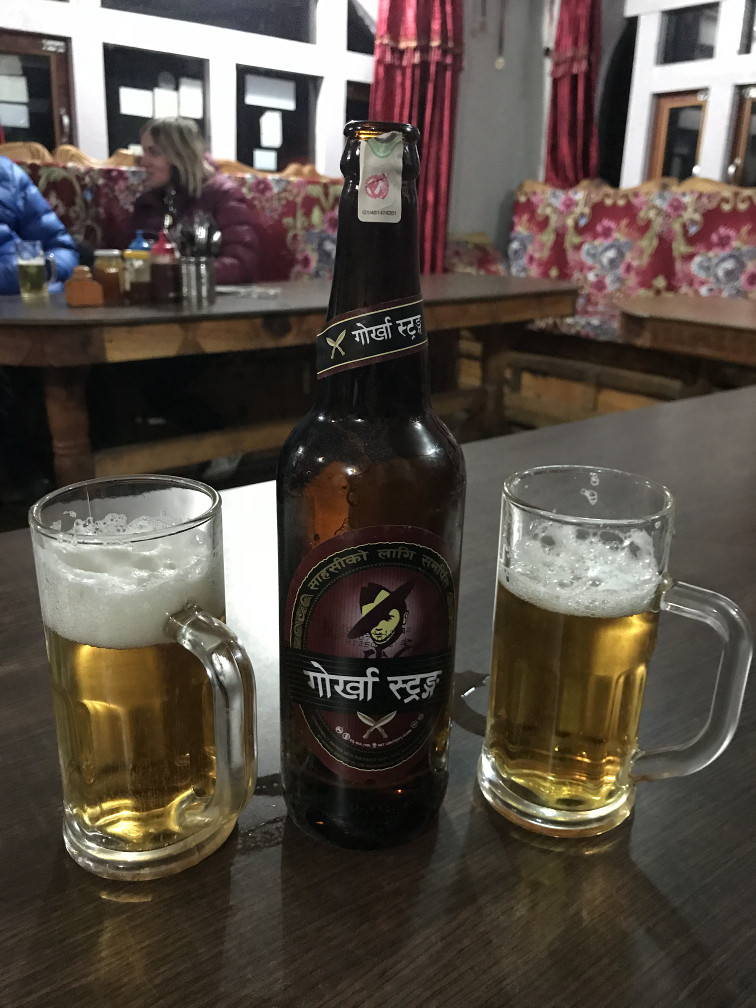
First beers of the trek 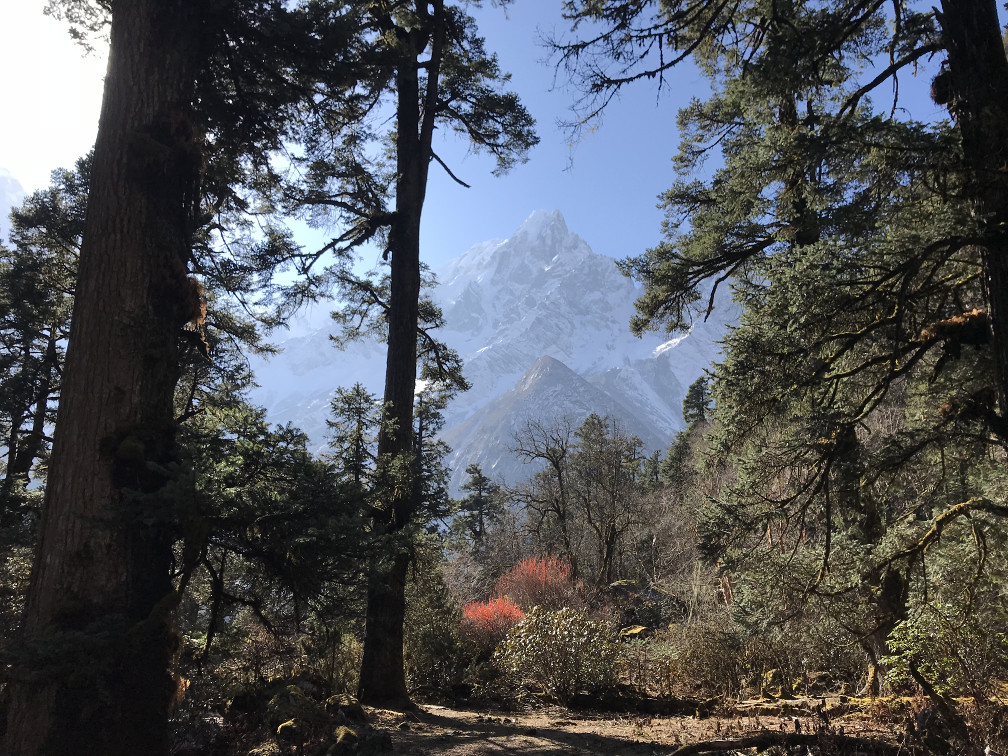
Beautiful paths of the day
Day 19: Last day of walking. Feels insane, how did we get here. 3 weeks has gone past so slow and so fast at the same time. We all have a hot bucket shower and people are saying it’s the best shower ever. That’s how our standards have changed. And it was for free.
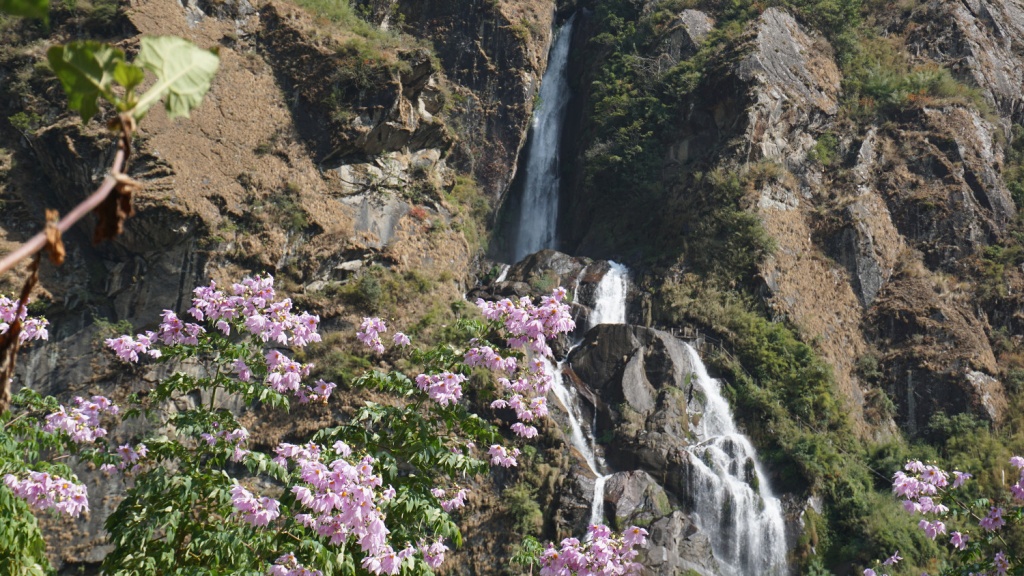
Waterfalls and pretty flowers 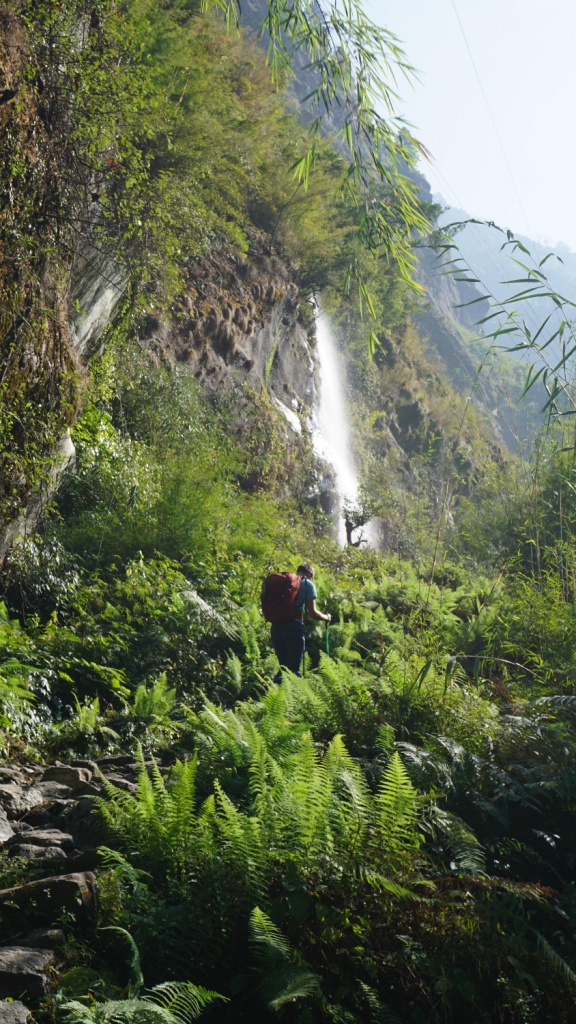
Greenery and waterfalls 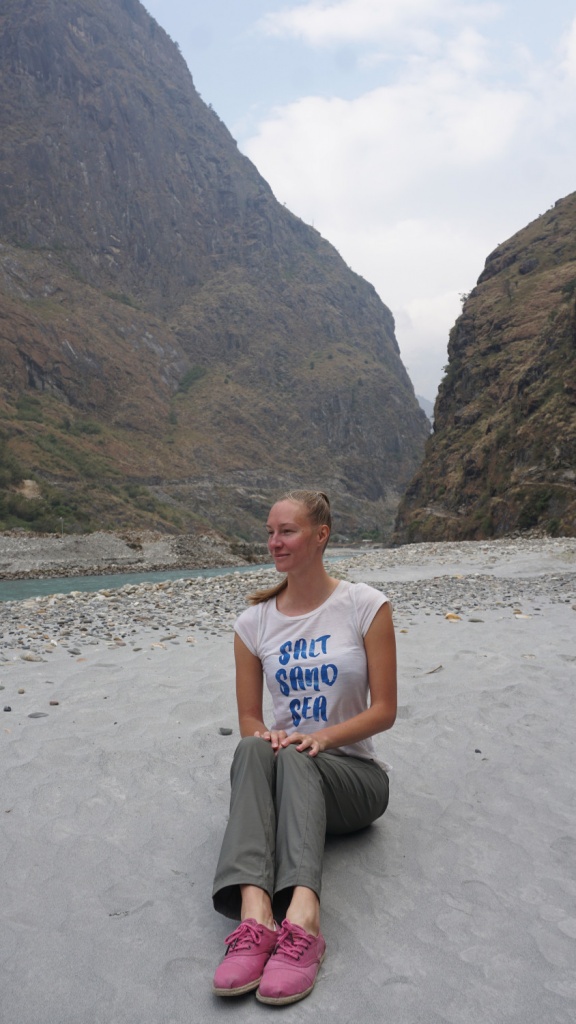
Even a beach, gray sand 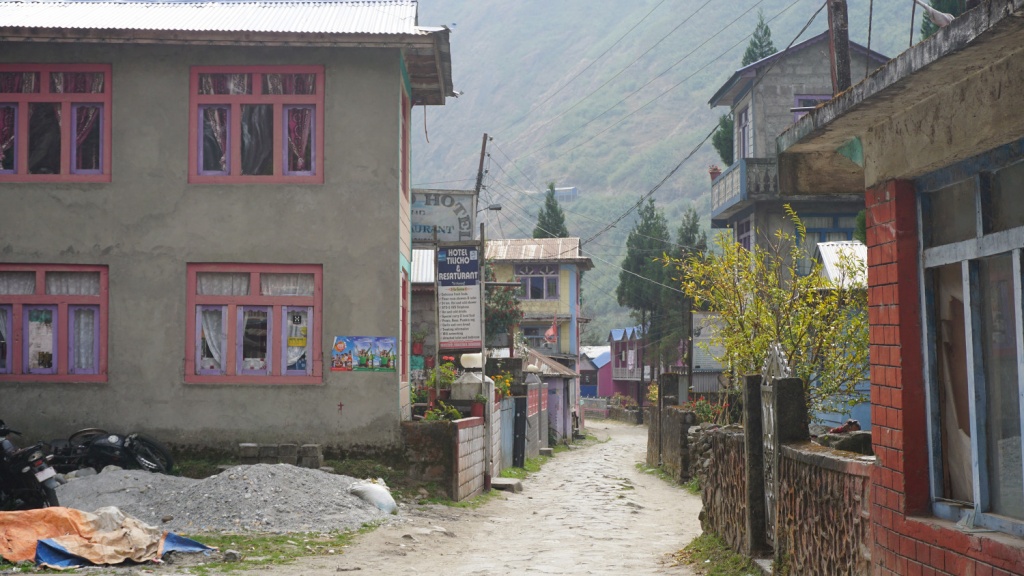
Our cute village street 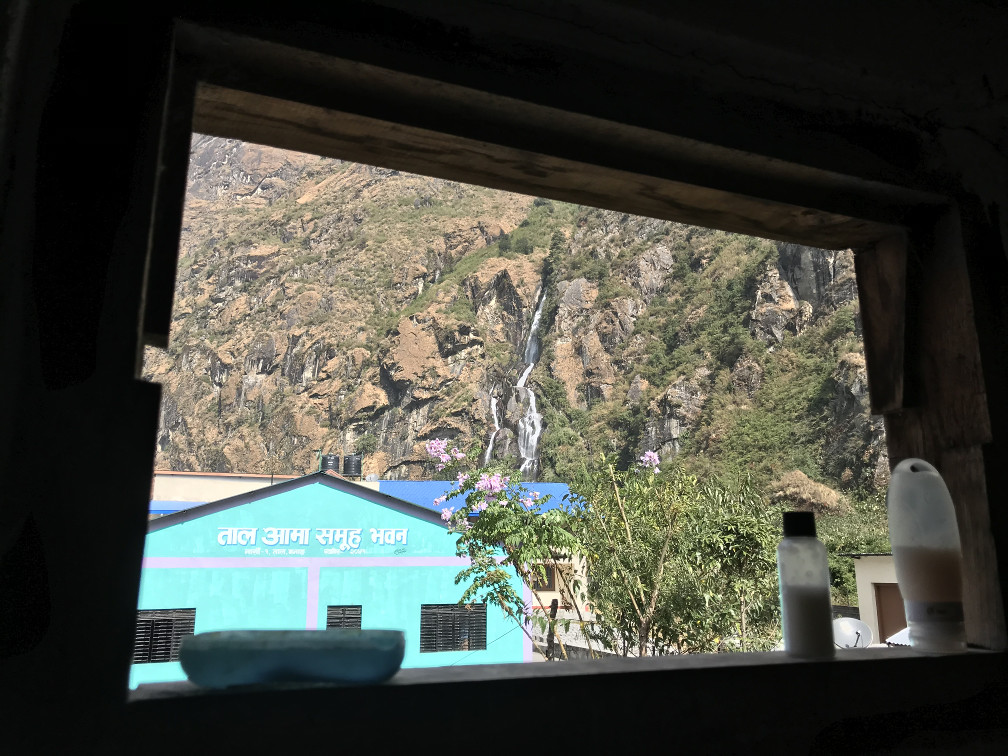
View from the bathroom with the most amazing shower ever
Day 20: A jeep takes us to Besisahar. V convinces me to ride at the back standing and it’s glorious. Free entertainment. Like Rikard in SATC2, but in the mountains. 😀
Vaidotas gets a shave and transforms from a man from the forest to a young city boy. We look for a pub to have a little party, but find none so celebrate with beers and a feedback round in the restaurant of our hotel. Everything in the village/city closes by 8-9pm and opens again around 7am.
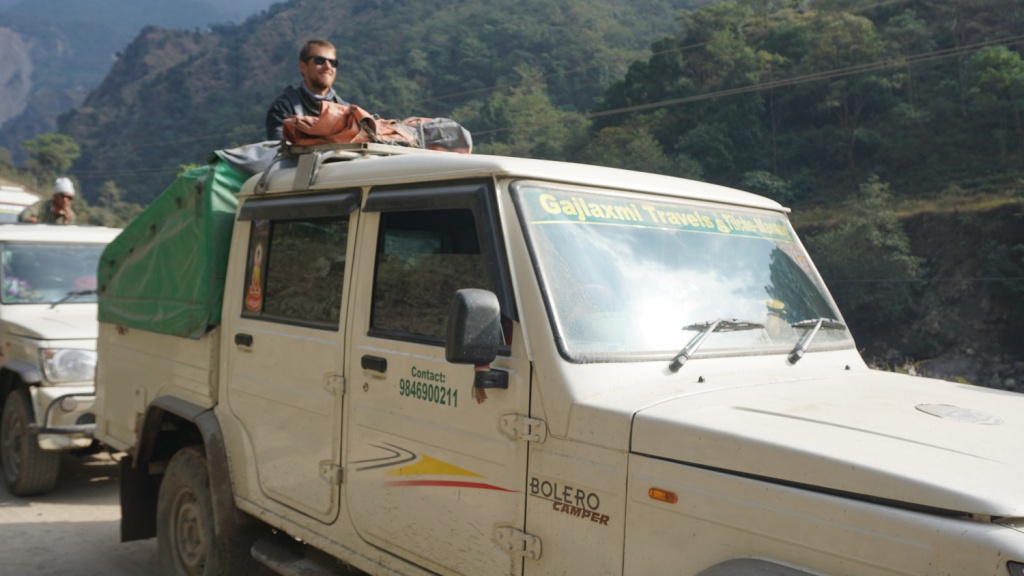
This is the way to ride a jeep 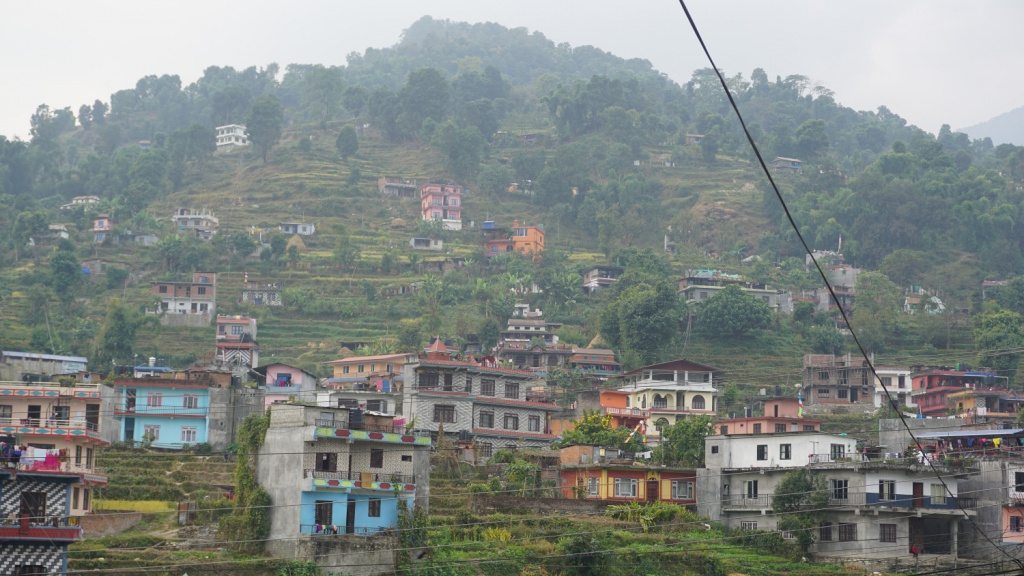
Colourful Besisahar 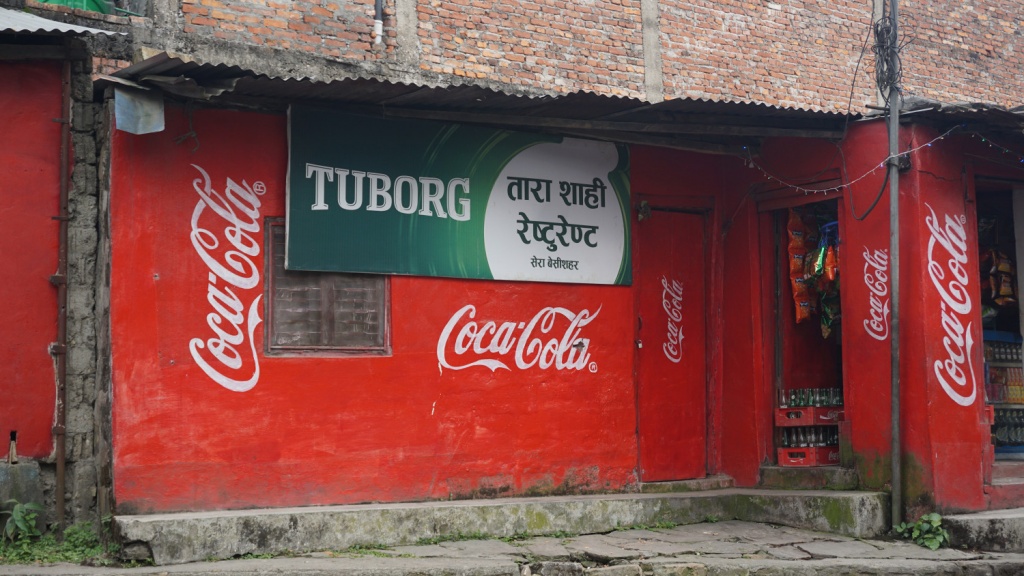
Back to world of advertising and decently priced Coke
Day 21: A microbus takes us to Pokhara.
Overall
So overall I think it was a great and educational trek. Incredible that western toilets and hot bucket showers started being identified as a luxury by our brains so quickly. The coldness really got to us. So a shorter trek would have probably been better. But now we know that we can survive a long trek with all the health and other issues it comes with. We consumed a lot more of all kinds of tablets we had with us than expected. Trekking in the dark in the snow was definitely a highlight and the feeling of staring at the beautiful snowy peaks in Chumling will hopefully stay with me for a while.
Technicalities
We used Pariwar Holidays as our trek organiser, they did a good job and we got a good deal I think. We paid 1030 USD per person incl everything below:
- Welcome and farewell dinners
- 1 night stay in Kathmandu after the trek
- 3 meals a day incl 1 cup of tea with each
- Accommodation during the trek
- 1 guide and 1 assistant guide
- All permits
- Transportation
- Bus tickets from KTM to trek start
- Jeep ride
- Bus tickets from end of trek to Pokhara
- Bus tickets from Pokhara to KTM
- Drop off at KTM airport
- Equipment rental: Trekking poles, down jackets, sleeping bags
Additionally we gave 100 USD as a tip to the guides and spent 14 265 NPR (125 USD) along the way on snacks, tea, showers etc. So the trip for the two of us cost us in total 2285 USD for 21 days.
There was a scale so we weighed our bags along the way: Mine was 9.3kg+camera bag+water, V’s was ca 11kg incl water. I was looking forward to not having the hip belt squeeze my stomach, but otherwise it wasn’t so bad having the normal travel backpacks instead of proper long-hike cushioned backpacks.
Our gear seems to have been very well chosen: We got no blisters, everything dried quickly and was easy to wash. The only thing that gave a bit of a hassle was the water purifier as the batteries didn’t want to work well in the cold. But with the spare set and lot of rubbing to heat them up we managed to get till the end with borrowing tablets only once (wow the chloride water tastes so bad, so I’d rather rub my batteries warm).
In the end, I kept to the same weight as before the trek, but fat turned into muscle. I lost my boobs almost completely, ass was also gone and arms were very fit. But from the insane amounts of food the stomach got very stretched out and was bloated for a long time after, which in Myanmar I finally realised was actually fatness. Appetite was insane for months after, so I kept eating quite a lot and snacked many many cookies. V lost 5 kg and was skinny all around – the one benefit one gets from food poisoning (and trekking). 🙈
Here are some traditional Nepalese songs we liked: